
Influencer Marketing Trends 2026: What Brands Need to Know
Influencer marketinghttps://coaxsoft.com/blog/influencer-marketing-trends has become one of the most powerful ways for brands to connect with modern consumers. In 2026, the industry is moving beyond simple sponsored posts and celebrity endorsements. Brands are now focusing on authentic creators, strong communities, short-form video, social commerce, artificial intelligence (AI), and measurable business results.
The Influencer Marketing Trends 2026 are changing quickly as consumers become more selective about the content they trust. Highly polished advertisements may attract attention, but relatable, authentic, and useful content often creates stronger connections with audiences.
At the same time, platforms such as Instagram, YouTube, and TikTok are becoming important channels for product discovery, creator content, and social commerce. These changes are shaping the latest Influencer Marketing Trends 2026 and encouraging brands to rethink how they connect with their target audiences.
Recent industry developments highlight several major shifts, including the growing importance of micro- and nano-influencers, performance-based partnerships, AI-assisted campaign management, short-form video, and commerce-focused creator campaigns. These influencer marketing trends are helping brands move from simple awareness campaigns toward measurable business outcomes.
For marketers, understanding the Influencer Marketing Trends 2026 is essential for creating campaigns that generate not only views and likes but also trust, engagement, leads, conversions, and sales. By following the right influencer marketing strategies, brands can build authentic creator partnerships and achieve stronger results in the evolving digital landscape.
What Is Influencer Marketing?
Influencer marketing is a digital marketing strategy in which brands collaborate with content creators who have an established audience and influence within a particular niche. As part of the Influencer Marketing Trends 2026, brands are increasingly focusing on authentic creator partnerships rather than relying only on celebrity endorsements or large follower counts.
Influencers can promote products and services through social media posts, short-form videos, reviews, tutorials, live content, and other engaging formats. Micro-influencers and nano-influencers are also becoming more important because they often have strong relationships and higher levels of trust within their communities.
Modern influencer marketing strategies are also becoming more data-driven and performance-focused. Brands can use AI, audience insights, and campaign analytics to identify suitable creators and measure results such as engagement, leads, conversions, and sales.
Understanding these Influencer Marketing Trends 2026 helps businesses choose the right creators, create authentic content, reach targeted audiences, and build stronger connections that can ultimately drive measurable business growth.
Influencers can create different types of content, including:
- Instagram Reels
- YouTube videos
- TikTok videos
- Product reviews
- Tutorials
- Live streams
- Stories
- User-generated content
- Affiliate content
The goal is not simply to reach a large number of people. Successful influencer marketing connects the right creator with the right audience and the right brand message.
In 2026, this approach is becoming more strategic. Brands are increasingly evaluating creators based on audience quality, trust, relevance, content performance, and conversions rather than follower count alone.
Why Influencer Marketing Is Growing in 2026
Consumers spend a significant amount of time discovering products through social platforms. In India, social media is increasingly influencing retail purchase decisions, while short-form video, content creators, and influencer marketing trends 2026 are playing a major role in product discovery.
This creates a major opportunity for businesses. As one of the key influencer marketing trends 2026, brands are moving beyond traditional sponsored posts and focusing on authentic creator partnerships, engaging content, and stronger connections with their target audience.
Instead of asking consumers to leave social media and search for a product, brands can introduce products through influencers and creators, provide useful information, answer questions, and guide audiences toward purchase within the same digital journey. This approach combines social media marketing, creator marketing, influencer collaborations, and short-form video content to create a smoother customer experience.
The result is a marketing experience that feels more natural, authentic, and connected to everyday social media use.
Top Influencer Marketing Trends 2026
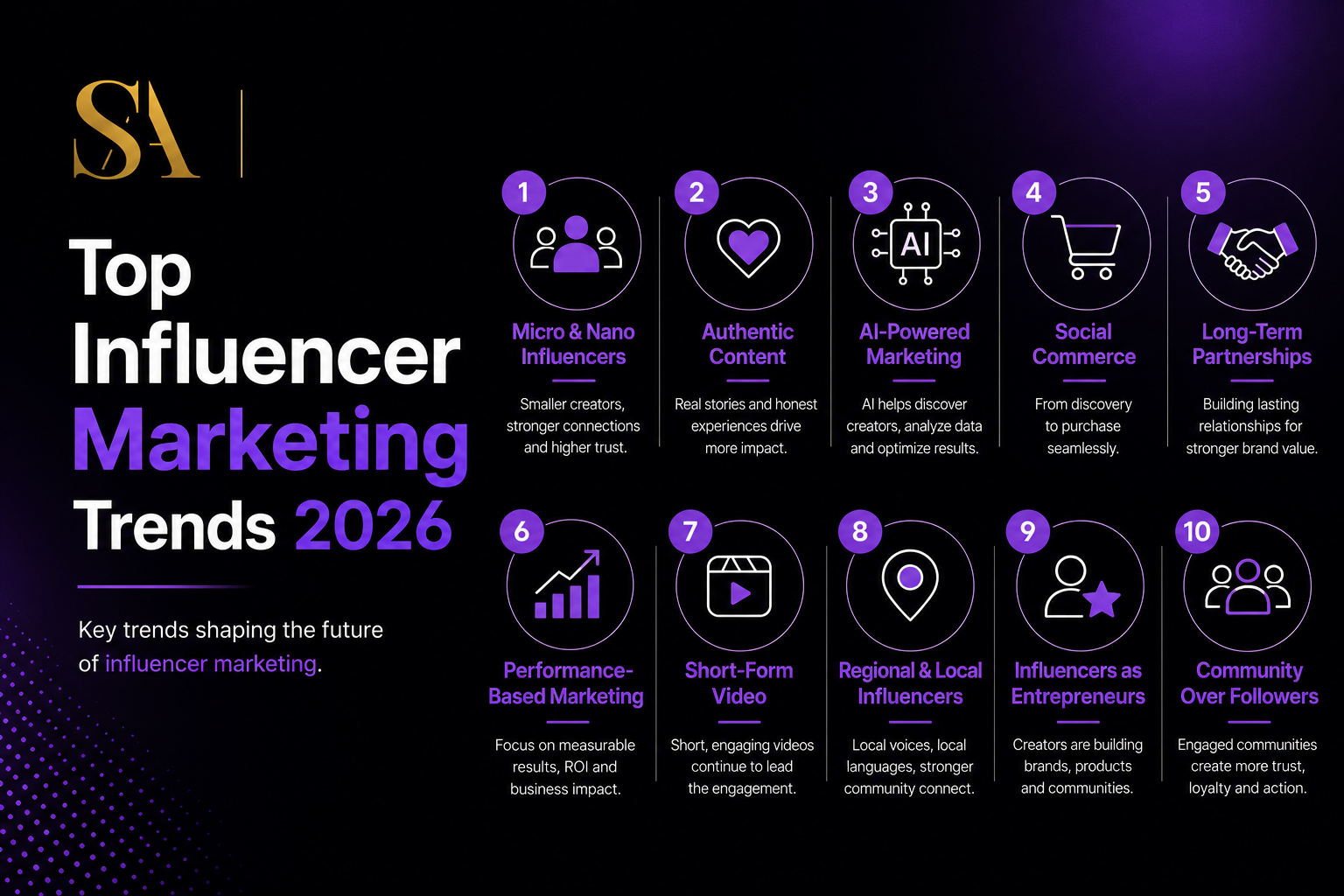
1. Micro and Nano Influencers Are Becoming More Important
One of the biggest influencer marketing trends 2026 is the growing importance of smaller creators.
Micro-influencers generally have smaller but highly engaged communities, while nano-influencers may have only a few thousand followers or fewer. These creators often have stronger relationships with their audiences because their content feels personal, relatable, and authentic.
One of the key Influencer Marketing Trends 2026 is the growing preference for micro- and nano-influencers. Instead of focusing only on follower count, brands are increasingly choosing creators based on audience relevance, engagement, trust, and niche expertise.
For businesses, working with smaller creators can also provide an effective influencer marketing strategy for reaching specific target audiences. Their authentic recommendations can generate meaningful engagement and help brands build stronger connections with potential customers.
Brands are increasingly working with smaller creators because they can provide:
- Higher audience relevance
- Strong community engagement
- Authentic product recommendations
- Niche targeting
- More affordable campaigns
- Local market reach
The shift is especially noticeable as brands recognize that influence is not necessarily determined by follower count. Research and current industry reporting show growing interest in creators with smaller audiences because they can offer authenticity and stronger community connections.
2. Authentic Content Is More Valuable Than Perfect Content
Consumers are becoming tired of content that looks too much like traditional advertising.
In 2026, authentic and relatable content is becoming increasingly important. Creators are sharing real experiences, behind-the-scenes moments, honest opinions, tutorials, mistakes, and everyday situations.
Instead of saying, “This is the best product,” a creator might explain how they actually used the product and what they liked or disliked about it.
This type of storytelling can make promotional content feel more trustworthy.
The trend toward less polished and more human content is also being observed across social media more broadly.
3. AI Is Transforming Influencer Marketing
Artificial intelligence is becoming an important part of influencer marketing.
Brands can use AI to help with:
- Creator discovery
- Audience analysis
- Content research
- Campaign planning
- Performance analysis
- Trend identification
- Reporting
- Personalization
AI can help marketers process large amounts of data and identify creators who match a brand’s target audience.
However, AI does not replace the human side of influencer marketing. Audiences still want real personalities, genuine experiences, and human storytelling.
Creators also need to be careful about how they use AI. Recent reporting shows that audiences can react negatively when creators appear to hide or overuse AI in their content.
The most successful approach in 2026 is therefore likely to be AI-assisted, human-led marketing.
4. Social Commerce Is Becoming a Major Strategy
Another important influencer marketing trend 2026 is the connection between influencer content and direct shopping.
Social commerce allows consumers to discover a product through a creator and move closer to purchase without leaving the platform or switching between multiple websites.
Creators can promote products through:
- Shoppable videos
- Product links
- Affiliate links
- Live shopping
- Product tags
- Discount codes
- Social storefronts
This makes influencer marketing more measurable because brands can connect content with clicks, conversions, and sales.
In India, the movement from social discovery to shopping is becoming particularly important, with AI, short-form video, creators, and messaging platforms increasingly connected to the purchasing journey.
5. Long-Term Creator Partnerships Are Replacing One-Time Campaigns
Brands are increasingly moving away from one-off influencer collaborations.
Instead, they are building long-term relationships with creators who genuinely understand the brand.
A long-term partnership can include:
- Monthly content
- Product launches
- Event participation
- Brand storytelling
- Affiliate programs
- Exclusive products
- Community campaigns
This approach gives creators more time to understand the brand and allows audiences to see repeated interactions between the creator and company.
Repeated exposure can also make a partnership feel more natural than a single sponsored post.
6. Performance-Based Influencer Marketing Is Growing
In the past, many influencer campaigns focused heavily on follower numbers, impressions, and engagement.
In 2026, brands are increasingly asking a more important question:
Did the campaign produce business results?
Performance-based influencer marketing connects creator compensation or campaign evaluation with measurable outcomes such as:
- Website visits
- Leads
- App downloads
- Product sales
- Affiliate revenue
- Conversion rates
- Return on ad spend
Industry analysis in 2026 highlights the movement from flat-fee campaigns toward performance-focused partnerships and stronger ROI accountability.
This makes influencer marketing more closely connected to overall digital marketing strategy.
7. Short-Form Video Continues to Lead
Short-form video remains one of the strongest content formats in influencer marketing.
Instagram Reels, TikTok videos, YouTube Shorts, and similar formats allow creators to communicate ideas quickly.
Successful short-form influencer content often includes:
- Strong opening hooks
- Storytelling
- Product demonstrations
- Before-and-after content
- Tutorials
- Reviews
- Challenges
- Educational tips
- Entertaining content
The key is not simply creating a short video. Brands need to provide creators with enough creative freedom to make the content fit naturally into their existing style.
8. Regional and Local Influencers Are Growing
Influencer marketing is becoming more localized.
Brands are increasingly working with creators who speak the language of their audience and understand local culture.
This is especially valuable in markets such as India, where audiences are highly diverse.
Regional-language creators can help brands connect with communities in:
- Kerala
- Tamil Nadu
- Karnataka
- Andhra Pradesh
- Telangana
- Maharashtra
- West Bengal
- Other regional markets
Regional influencer marketing can make campaigns feel more personal because the creator understands the audience’s language, culture, lifestyle, and purchasing habits. Current South India-focused industry coverage also highlights vernacular content and regional creators as important 2026 strategies.
9. Influencers Are Becoming Entrepreneurs
Influencers are no longer only content creators.
Many creators are developing their own businesses, products, communities, subscriptions, courses, events, and brands.
This creates new opportunities for companies to collaborate with creators beyond traditional sponsorships.
For example, a creator may become:
- A brand ambassador
- A product co-creator
- A business partner
- An affiliate seller
- A community builder
- A founder
The creator economy is therefore becoming more business-focused. Recent industry reporting also shows creator-management companies expanding their focus toward helping influencers develop diversified businesses and revenue streams.
10. Community Is More Important Than Follower Count
The future of influencer marketing is not simply about having millions of followers.
A smaller creator with a highly engaged community can sometimes be more valuable than a celebrity with a huge but less relevant audience.
Brands should ask:
Does this creator’s audience trust them?
A strong community can lead to:
- More meaningful conversations
- Better engagement
- Higher product consideration
- Stronger loyalty
- Better conversions
- Long-term brand advocacy
This is why community-driven influencer marketing is becoming one of the defining ideas of 2026.
How Brands Can Adapt to Influencer Marketing Trends 2026
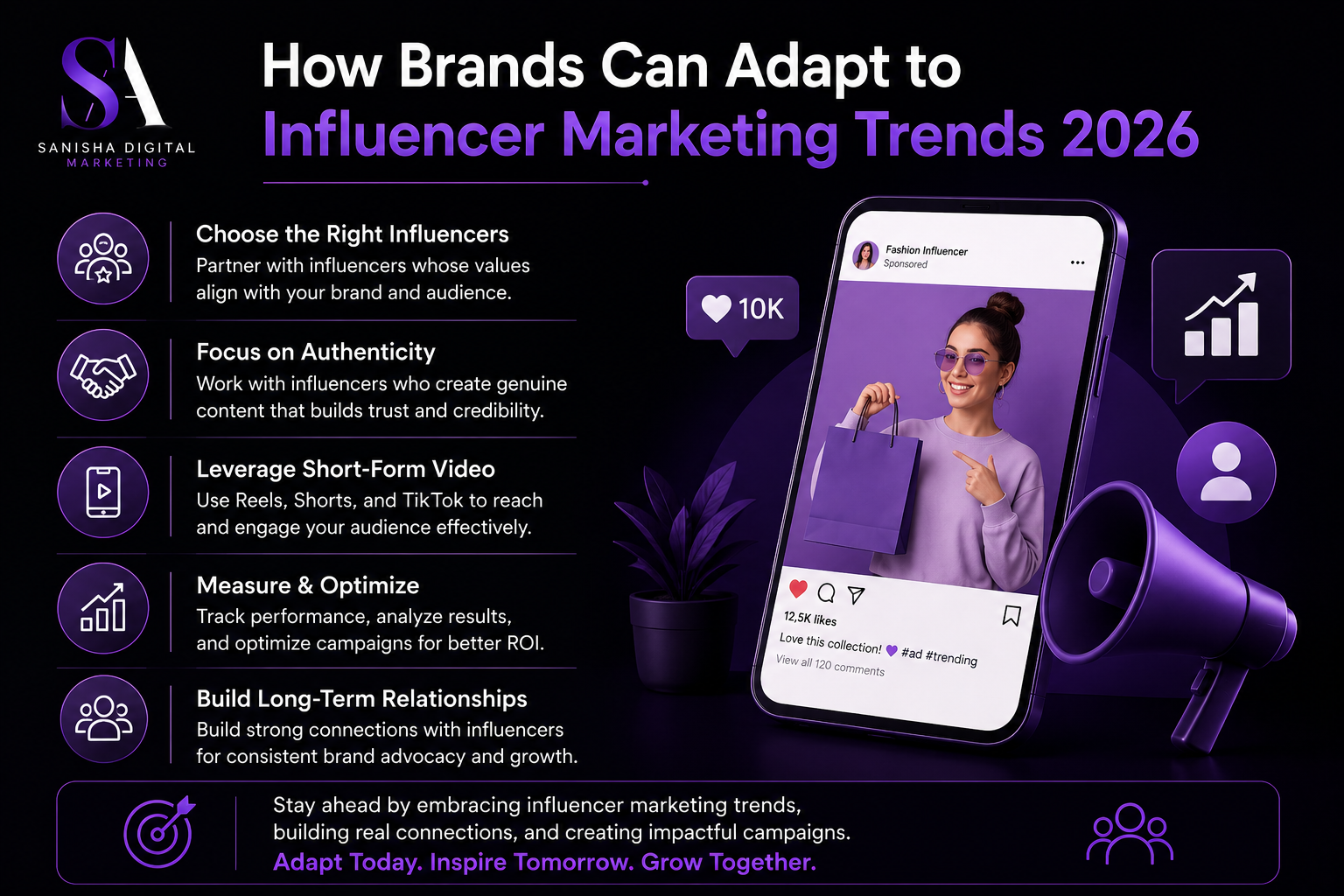
Brands that want to succeed with the Influencer Marketing Trends 2026 should focus on strategy rather than simply following every social media trend.
First, identify the target audience and understand where they spend their time online. Then choose creators whose audience closely matches the brand’s target market. This helps brands build more authentic influencer marketing campaigns and reach the right consumers.
Next, define clear campaign objectives. A brand awareness campaign may require different creators and content strategies compared with a campaign designed to generate direct sales or conversions. Setting clear goals is an important part of successful influencer marketing strategies in 2026.
Brands should also give creators creative freedom. Influencers understand their audience better than most brands do, so overly controlling the content can make it feel unnatural. Authentic creator content is one of the key influencer marketing trends 2026 that brands should pay attention to.
Finally, measure meaningful results. Engagement is useful, but marketers should also track clicks, leads, conversions, sales, customer acquisition costs, and return on investment. Using these metrics helps brands understand what works and improve their future influencer marketing campaigns.
The Future of Influencer Marketing
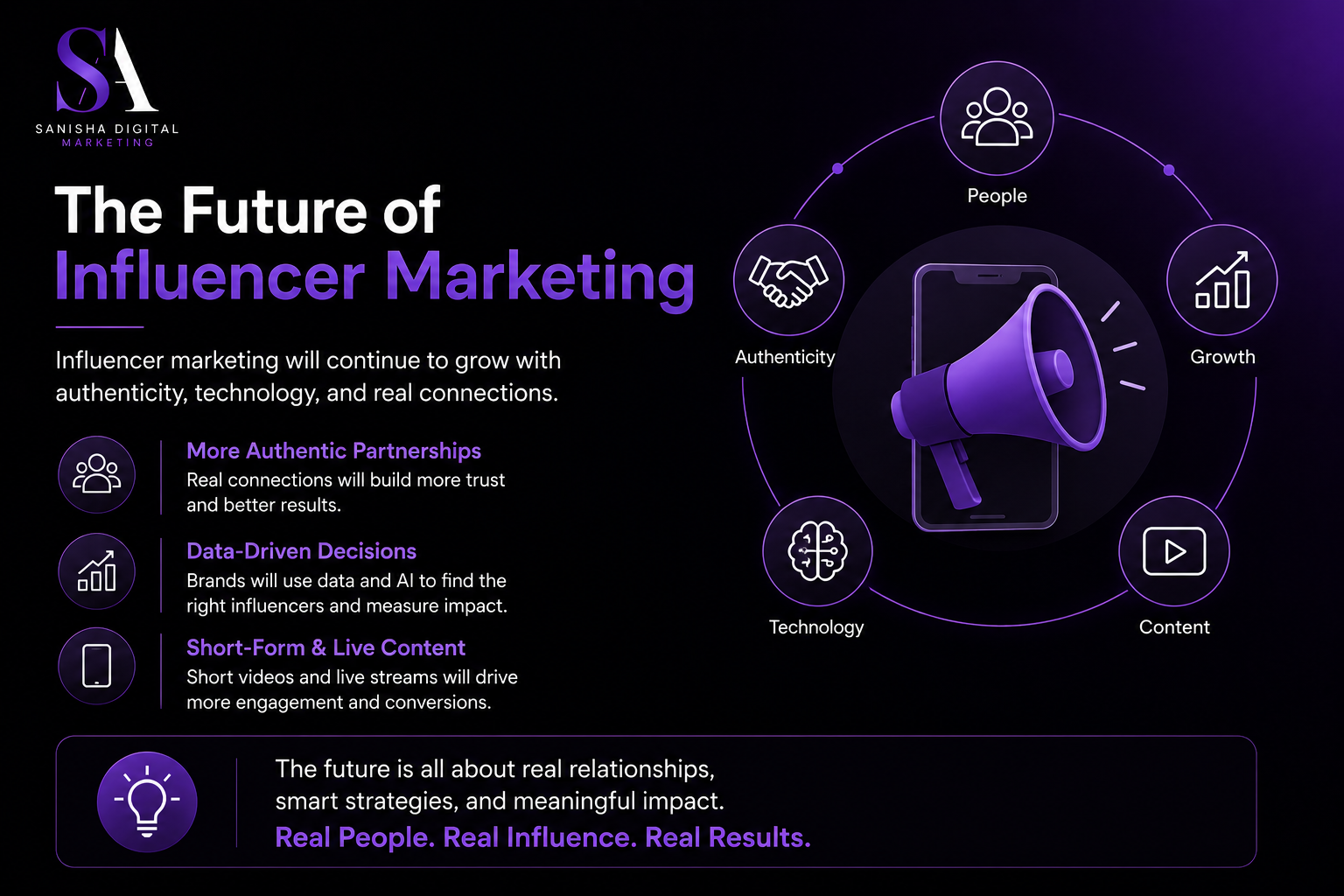
The future of Influencer Marketing Trends 2026 will be increasingly connected to technology, social commerce, and online communities. Brands are moving toward smarter and more authentic ways of working with creators, making influencer marketing an important part of modern digital marketing strategies.
AI will help marketers discover relevant creators, understand audience behaviour, and analyze campaign performance faster. Social commerce will make it easier for audiences to move from content discovery to purchase, while micro and niche influencers will continue to provide authenticity and strong community connections.
At the same time, audiences will continue to demand transparency, genuine content, and meaningful interactions. This means brands cannot depend only on follower counts, viral content, or one-time influencer collaborations. Instead, they need to build long-term creator partnerships that provide real value to their target audience.
The most successful influencer marketing campaigns in 2026 are likely to combine human creativity + AI technology + authentic storytelling + social commerce + measurable performance. By following these Influencer Marketing Trends 2026, brands can create stronger connections with audiences and achieve more meaningful marketing results.
Conclusion
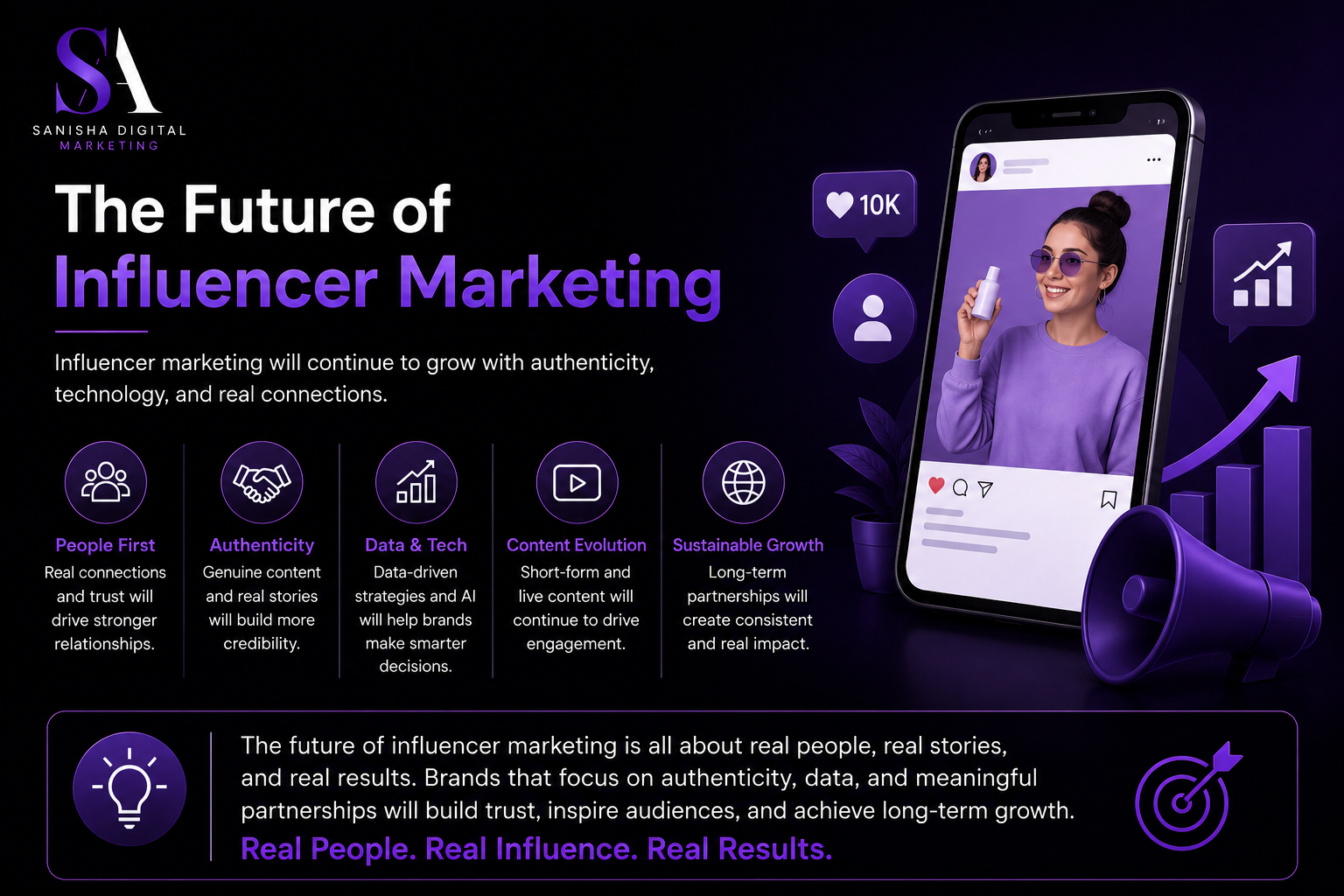
The Influencer Marketing Trends 2026 show that the industry is becoming more authentic, data-driven, localized, and commerce-focused. Brands are moving beyond traditional influencer promotions and focusing on meaningful creator partnerships, engaging content, and measurable results.
Micro and nano influencers are gaining more attention because they offer niche audiences, stronger engagement, and authentic connections. At the same time, short-form video continues to play an important role in influencer marketing strategies, while AI is helping brands discover creators, analyze audience data, and improve campaign performance.
Another important Influencer Marketing Trend 2026 is the growth of social commerce. Influencer content is increasingly connecting product discovery with purchasing decisions, making the customer journey faster and more convenient. Long-term influencer partnerships and community building are also becoming more valuable than one-time promotional posts.
For brands, the biggest lesson is simple: influence is not just about reach—it is about trust, engagement, and action. Businesses that choose the right creators, encourage authentic storytelling, use AI and technology intelligently, and measure real business results will be better positioned to succeed.
By understanding the latest influencer marketing trends 2026, brands can create stronger creator marketing strategies, build genuine relationships with their audiences, and achieve measurable business growth. In 2026, the future of influencer marketing belongs to brands and creators who can combine authenticity + technology + community + storytelling + measurable performance.