
Online Shop Marketing: A Complete Guide to Growing Your E-Commerce Business
Focus Keyword: Online Shop Marketing
In today’s digital world, starting an online store is easier than ever. However, attracting customers and generating consistent sales can be challenging. Thousands of online businesses compete for the attention of the same customers every day. This is why online shop marketing http://sanishavp.comhas become essential for businesses that want to grow, build brand awareness, and increase revenue.
Online shop marketing includes different digital strategies used to promote products, attract potential customers, increase website traffic, and convert visitors into buyers. From search engine optimization and social media marketing to email campaigns and paid advertising, businesses can use several channels to reach their target audience.
Whether you are running a small online business or a growing e-commerce brand, having a well-planned marketing strategy can make a significant difference.
What Is Online Shop Marketing?
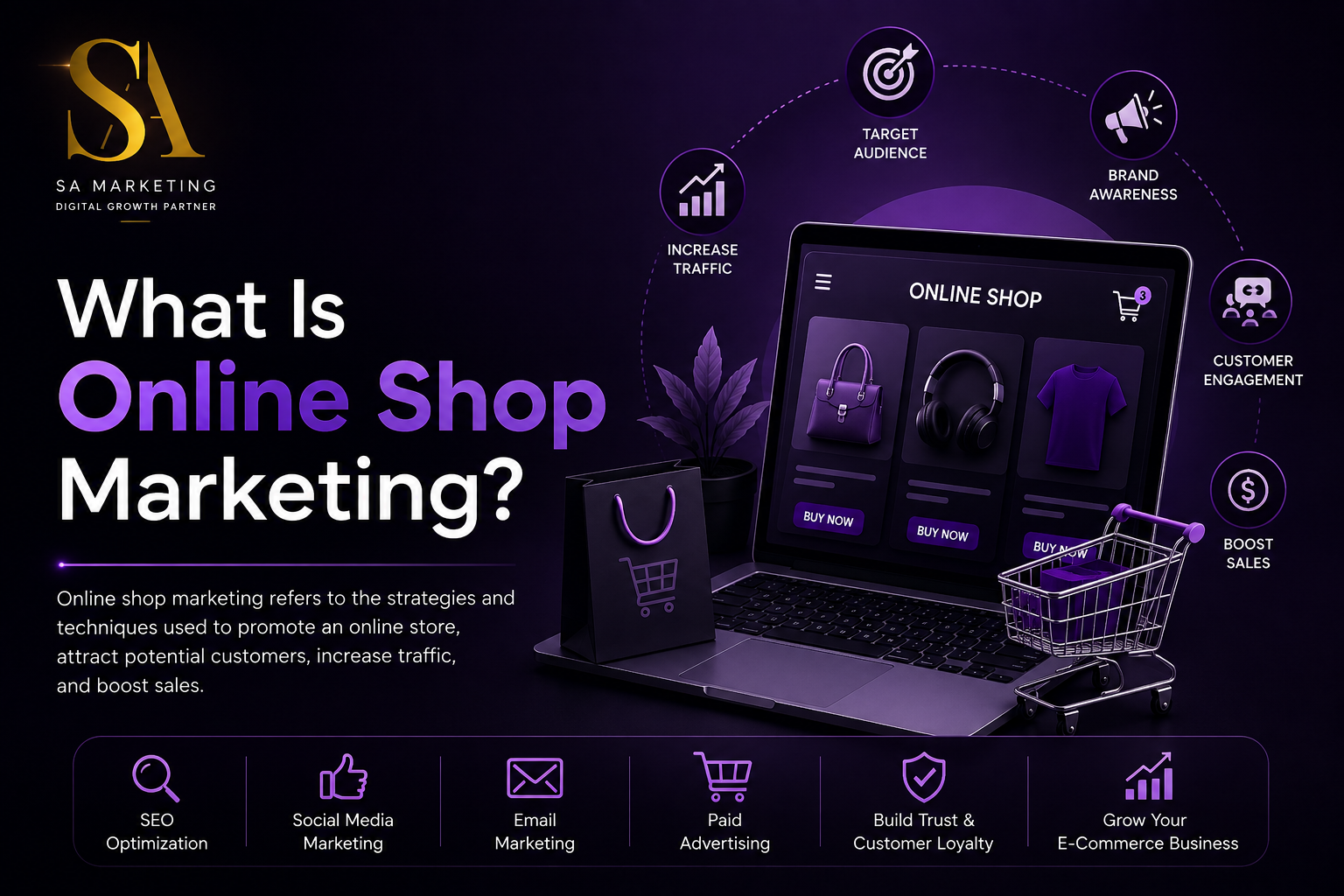
Online shop marketinghttps://vervaunt.com/ecommerce-brands-with-blogs refers to the process of promoting an e-commerce store and its products through digital marketing channels. The main goal is to attract the right customers, encourage them to visit your online store, and ultimately persuade them to make a purchase.
Unlike traditional marketing, online marketing allows businesses to target specific audiences based on their interests, location, online behavior, demographics, and purchasing habits.
For example, an online clothing store can use Instagram to showcase new products, Google Search to reach people actively looking for clothing, and email marketing to encourage existing customers to make another purchase.
A successful online shop marketing strategy usually combines multiple channels instead of depending on only one method.
Why Is Online Shop Marketing Important?
Having a professional website and quality products does not automatically guarantee sales. Customers first need to discover your store, understand your products, trust your brand, and have a convenient buying experience.
This is where marketing becomes important.
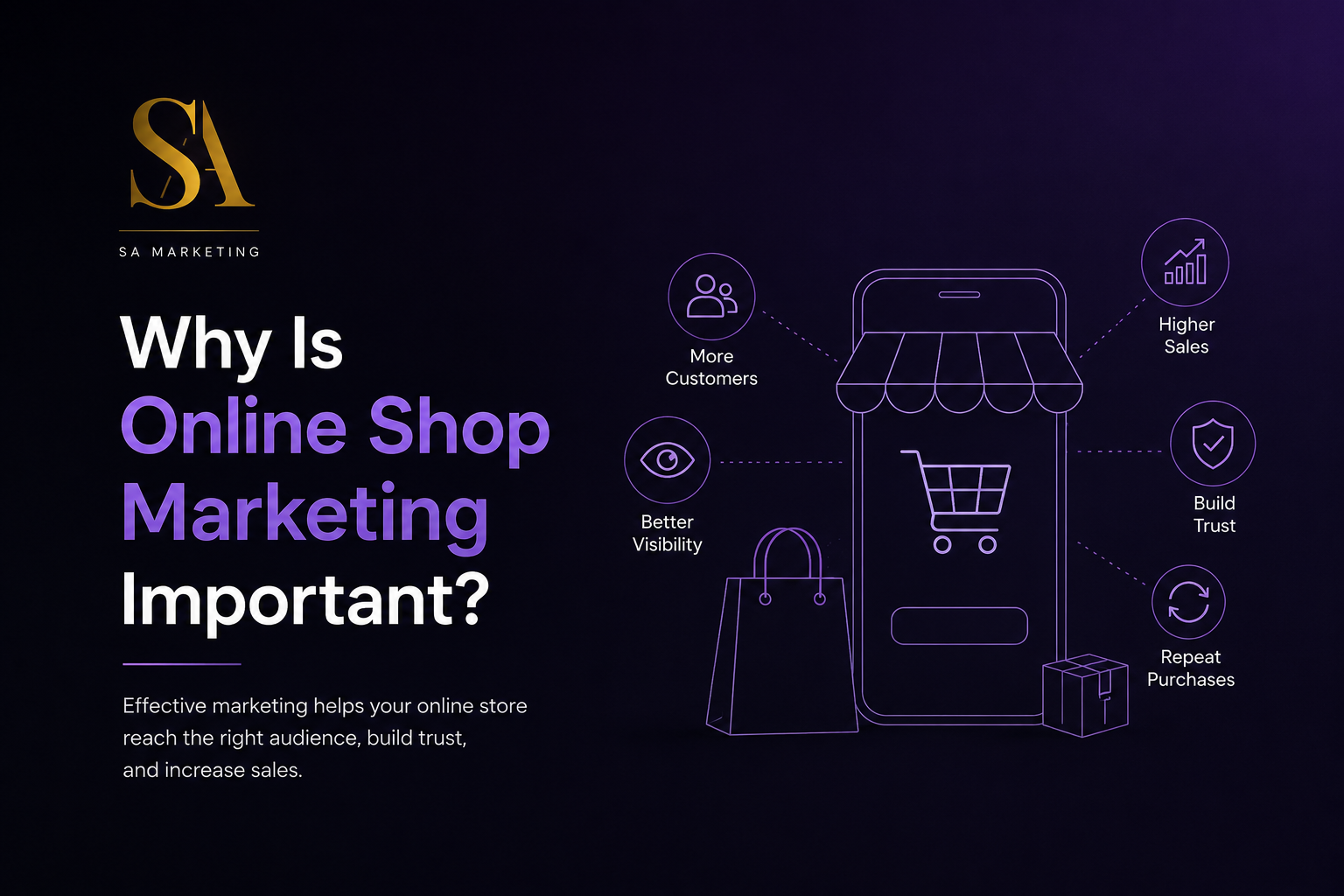
Effective online shop marketing can help businesses:
- Increase website traffic
- Attract new customers
- Improve brand visibility
- Generate leads
- Increase product sales
- Build customer trust
- Encourage repeat purchases
- Improve customer relationships
- Compete with larger brands
- Develop a strong online presence
Digital marketing also makes it easier to measure performance. Businesses can track website visits, clicks, engagement, conversions, and sales to understand which strategies are working.
1. Search Engine Optimization for Online Shops
Search Engine Optimization, commonly known as SEO, is one of the most valuable strategies for an online store. SEO helps your website appear higher in search engine results when potential customers search for relevant products or information.
For example, someone searching for “best skincare products for dry skin” may discover an online beauty store through a useful blog article or optimized product page.
To improve e-commerce SEO, businesses should focus on:
- Relevant keyword research
- Optimized product titles
- Helpful product descriptions
- Image optimization
- Internal linking
- Fast website loading
- Mobile-friendly design
- Useful blog content
- Clear website navigation
- Customer reviews
Using keywords naturally throughout your website can help search engines understand what your store offers. However, keyword stuffing should be avoided because content should primarily be written for people, not just search engines.
2. Social Media Marketing
Social media has become one of the most powerful tools for promoting online shops. Platforms such as Instagram, Facebook, YouTube, Pinterest, and TikTok allow businesses to showcase products and communicate directly with potential customers.
Visual content is particularly useful for e-commerce brands. Businesses can create product photos, short videos, tutorials, customer testimonials, behind-the-scenes content, and educational posts.
For example, a fashion store could create a short video showing different ways to style one product. A skincare brand could create educational content explaining how to use a particular product.
Consistency is important. Instead of posting only promotional content, brands should create a mixture of educational, entertaining, inspirational, and promotional content.
Social media can also help businesses build a community around their brand.
3. Content Marketing
Content marketing involves creating valuable and useful content to attract potential customers. Instead of constantly asking people to buy something, businesses can provide information that helps customers solve problems or make better purchasing decisions.
Blog posts are an excellent example of content marketing.
An online furniture store could publish articles such as:
- How to Choose the Right Sofa for Your Home
- Best Furniture Ideas for Small Spaces
- How to Maintain Wooden Furniture
This type of content can attract people who are researching before making a purchase.
Content marketing can also support SEO because regularly publishing useful content gives search engines more pages to discover and rank.
4. Email Marketing
Email marketing is another effective part of online shop marketing. It allows businesses to communicate directly with customers who have already shown interest in their products.
An online store can use email campaigns to send:
- New product announcements
- Special discounts
- Seasonal offers
- Personalized recommendations
- Abandoned-cart reminders
- Order updates
- Customer loyalty offers
- Helpful product information
Personalization can make email campaigns more effective. Instead of sending the same message to everyone, businesses can recommend products based on previous purchases or browsing behavior.
Building a quality email list can become a valuable long-term asset for an online business.
5. Paid Advertising
Organic marketing can take time, so many online businesses also use paid advertising to reach customers more quickly.
Businesses can advertise through search engines, social media platforms, display networks, and other digital advertising channels.
Search advertising is especially useful because it can reach people who are already searching for a particular product or service.
Social media advertising can also be highly targeted. Businesses can choose audiences based on factors such as interests, demographics, location, and online behavior.
However, paid advertising should be carefully monitored. Businesses need to track metrics such as cost per click, conversion rate, return on ad spend, and overall sales.
6. Influencer Marketing
Influencer marketing involves collaborating with individuals who have an established audience on social media or other digital platforms.
Influencers can introduce products to their followers through reviews, demonstrations, tutorials, or sponsored content.
For small businesses, working with smaller niche influencers can sometimes be more effective than choosing influencers with millions of followers. Their audiences may be more specific and highly engaged.
Before collaborating with an influencer, businesses should consider:
- Audience relevance
- Engagement rate
- Content quality
- Brand reputation
- Audience demographics
- Previous collaborations
The right influencer can help increase awareness and build trust among potential customers.
7. Customer Reviews and Social Proof
Customers often want to know what other people think before purchasing a product. Reviews, ratings, testimonials, and user-generated content can therefore play an important role in online shop marketing.
Positive customer reviews can reduce uncertainty and help potential buyers feel more confident.
Businesses can encourage customers to leave honest reviews after purchasing a product. They can also showcase customer photos or videos, with permission, on their website and social media platforms.
Social proof works because people often consider the experiences of other customers when making purchasing decisions.
8. Improve the Online Shopping Experience
Marketing can bring visitors to your website, but a poor shopping experience can prevent them from buying.
An online store should be easy to navigate and work smoothly on mobile devices. Product information should be clear, images should be high quality, and customers should be able to find important information easily.
A good online shopping experience should include:
- Simple navigation
- Clear product information
- High-quality product images
- Easy checkout
- Multiple payment options
- Transparent shipping information
- Clear return policies
- Fast-loading pages
- Mobile-friendly design
- Accessible customer support
The easier it is for customers to find and purchase products, the greater the possibility of conversion.
9. Retargeting and Remarketing
Not every visitor purchases something during their first visit. Some customers may browse products, add items to their cart, and leave without completing the purchase.
Retargeting can help businesses reconnect with these potential customers.
For example, someone who viewed a pair of shoes but did not purchase them may later see an advertisement reminding them about the product.
Remarketing can also be used for customers who have purchased before. Businesses can show them related products or new collections based on their previous interests.
10. Mobile Marketing
A large number of customers use smartphones to browse websites and shop online. Therefore, mobile optimization is an essential part of online shop marketing.
A mobile-friendly website should have readable text, simple navigation, properly sized images, and an easy checkout process.
Businesses can also use mobile-focused marketing strategies such as social media advertising, mobile-friendly email campaigns, and messaging platforms.
If customers have difficulty using a website on their phones, they may leave before completing their purchase.
How to Build an Online Shop Marketing Strategy
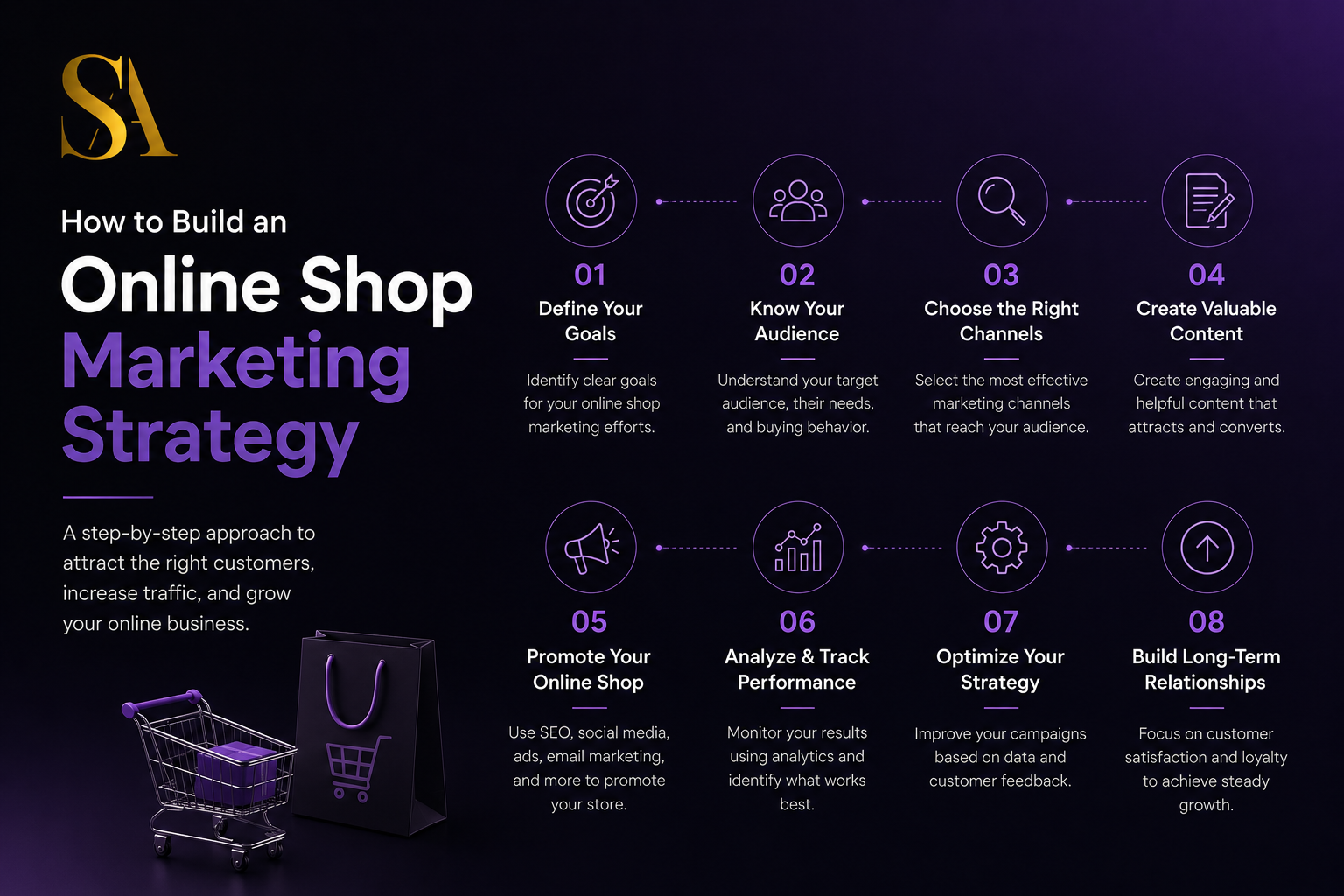
Creating a successful strategy starts with understanding your target audience.
First, identify who your ideal customers are. Consider their age, interests, needs, problems, shopping habits, and purchasing behavior.
Next, establish clear goals. Your goal could be increasing website traffic, generating more sales, gaining followers, building an email list, or increasing repeat purchases.
After setting goals, choose the most suitable marketing channels. A business targeting younger customers may focus heavily on social media and video content, while another business may benefit more from SEO and email marketing.
Create useful content regularly, monitor your campaigns, and make improvements based on the results.
Common Online Shop Marketing Mistakes
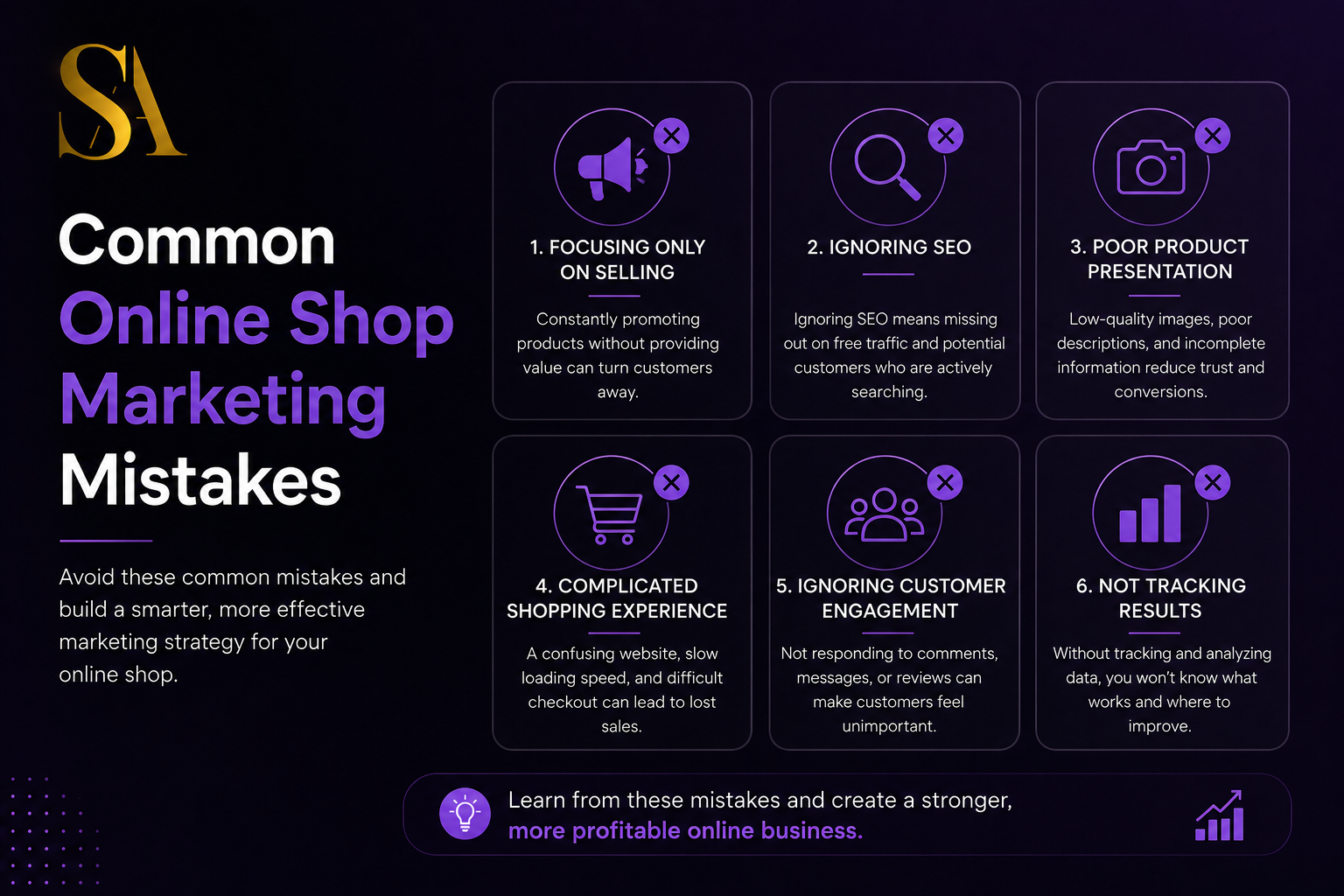
Businesses can make several mistakes when promoting their online stores.
One common mistake is focusing only on selling. Customers do not want every social media post to be an advertisement. Providing useful and engaging content can create stronger relationships.
Another mistake is ignoring SEO. Without search optimization, businesses may miss opportunities to attract customers through organic search.
Poor product descriptions, low-quality images, complicated checkout processes, and slow websites can also reduce conversions.
Businesses should also avoid trying to use every marketing platform at once. It is often better to focus on a few channels where the target audience is most active and use them effectively.
Measuring Online Shop Marketing Performance
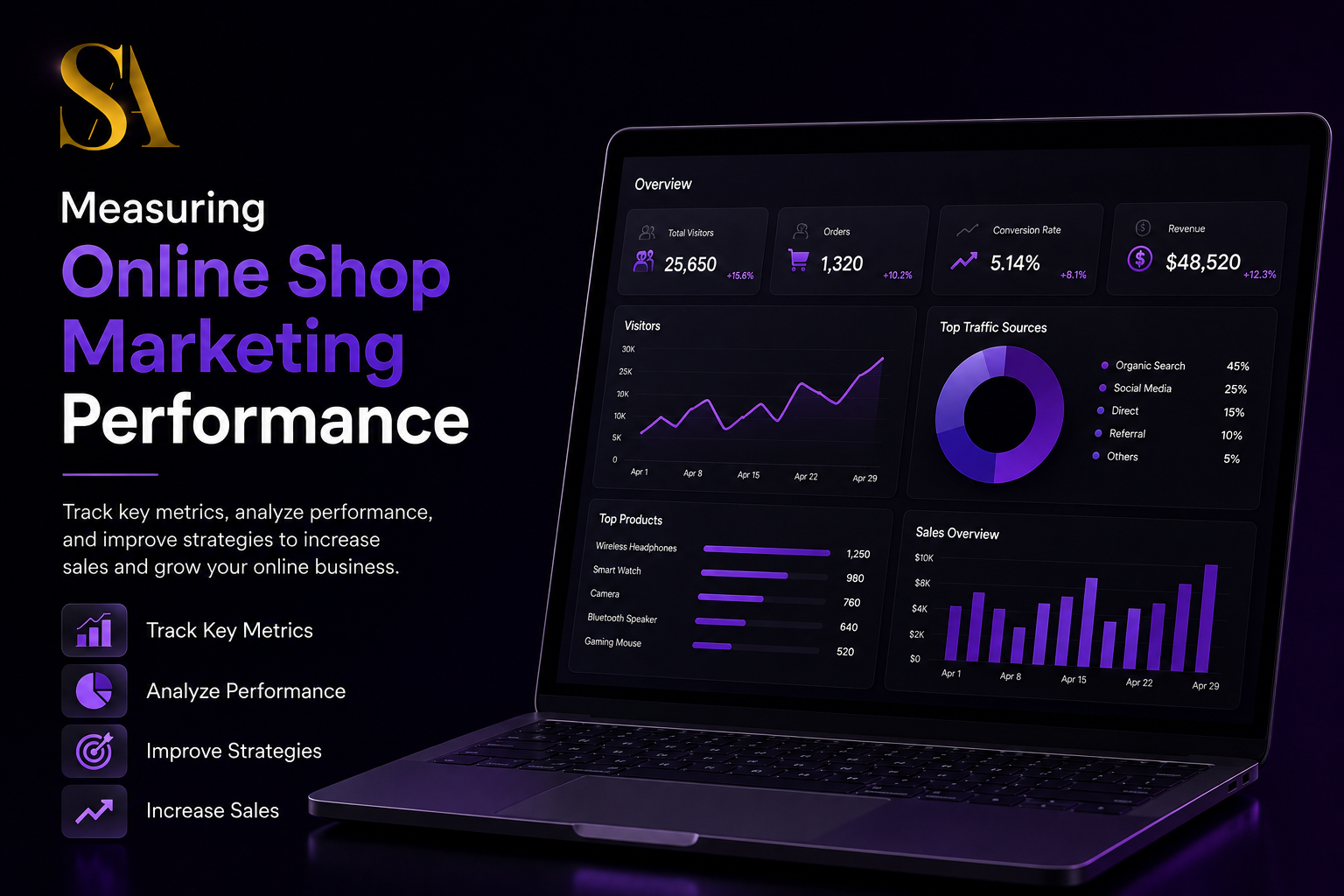
Marketing decisions should be based on data whenever possible.
Important metrics include:
- Website traffic
- Conversion rate
- Customer acquisition cost
- Average order value
- Return on advertising spend
- Email open rate
- Social media engagement
- Shopping cart abandonment rate
- Repeat purchase rate
For example, if a website receives thousands of visitors but generates very few sales, the business may need to improve its product pages, pricing, checkout process, or overall customer experience.
Regularly reviewing performance helps businesses identify what works and where improvements are needed.
Future of Online Shop Marketing
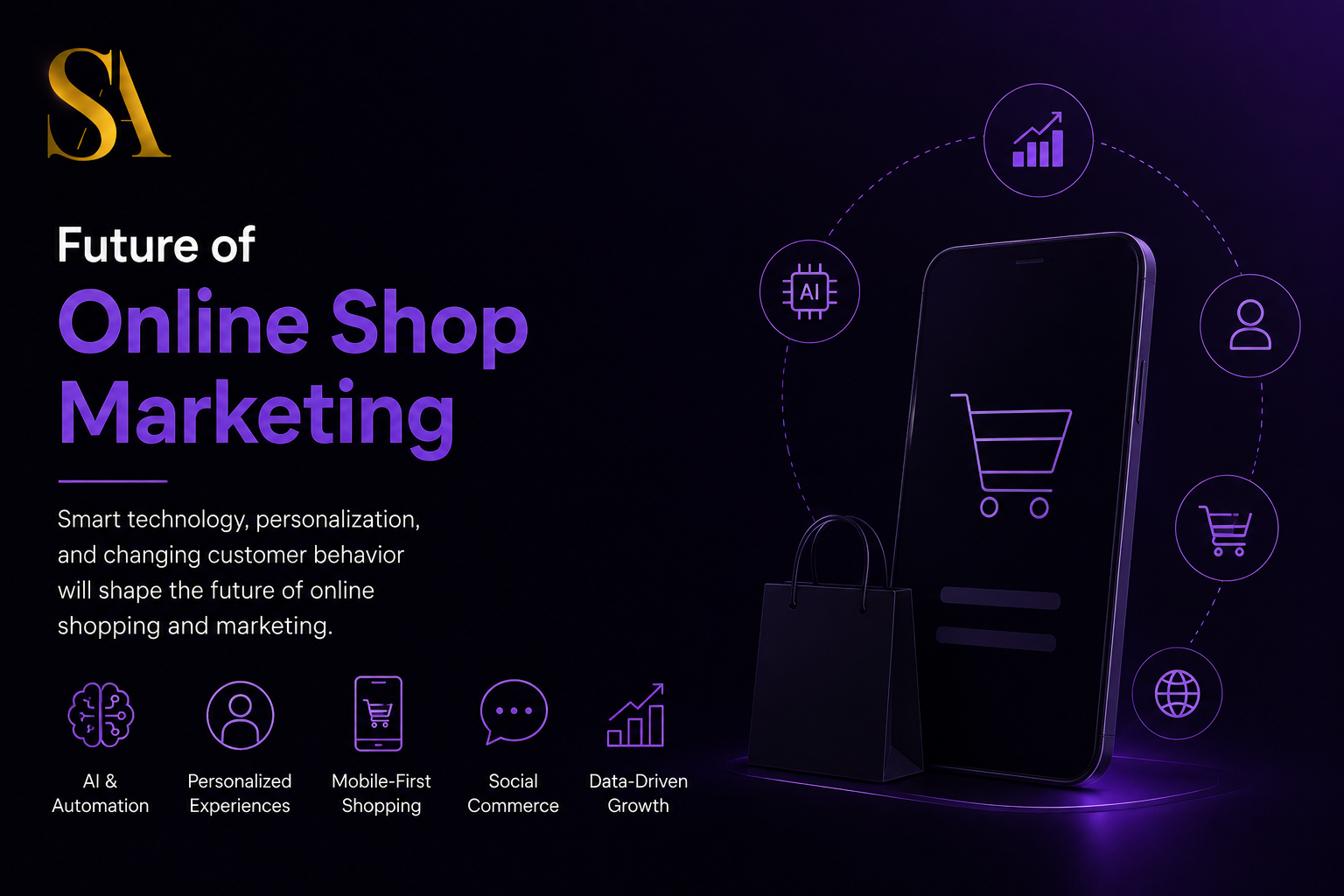
The future of online shop marketing will continue to be influenced by technology, personalization, artificial intelligence, automation, short-form video, social commerce, and changing customer expectations.
Customers increasingly expect brands to provide convenient and personalized experiences. Businesses that understand their customers and adapt to changing digital trends will have better opportunities to remain competitive.
Artificial intelligence can also help businesses analyze customer behavior, create content ideas, personalize recommendations, automate customer service, and improve marketing campaigns.
However, technology should support a strong customer-focused strategy rather than replace genuine communication and trust.
Conclusion
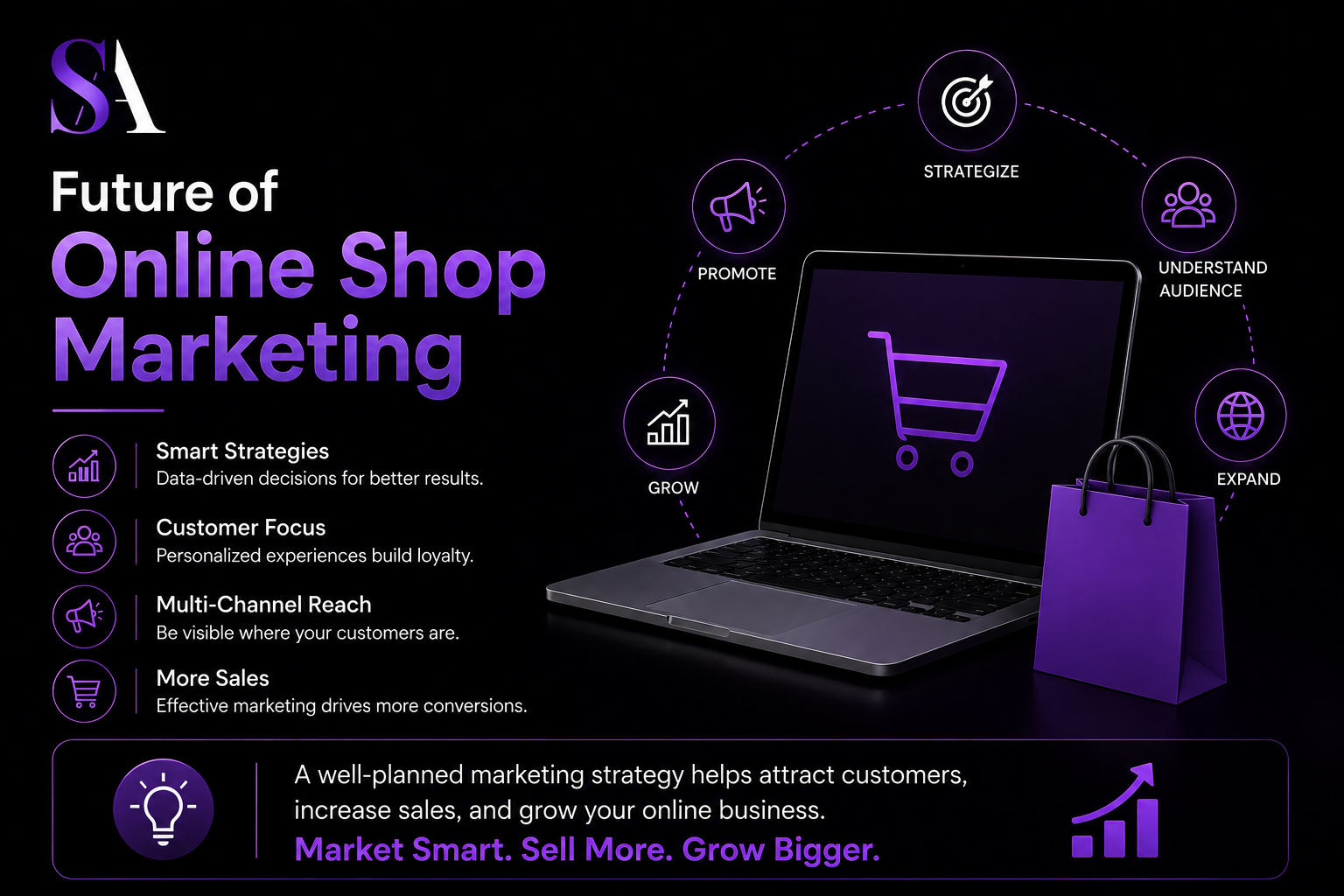
Online shop marketing is essential for businesses that want to succeed in the competitive e-commerce environment. Simply creating an online store is not enough. Businesses need to actively attract customers, communicate their value, build trust, and provide an excellent shopping experience.
SEO can improve organic visibility, social media can build brand awareness, content marketing can educate customers, email marketing can encourage repeat purchases, and paid advertising can help reach targeted audiences quickly.
The most effective approach is to combine suitable strategies, measure their performance, and continuously improve them. By understanding their target audience and delivering valuable experiences, online businesses can increase visibility, attract more customers, and build long-term growth.
A well-planned online shop marketing strategy is not just about getting more visitors—it is about attracting the right people, turning them into customers, and creating relationships that encourage them to come back