
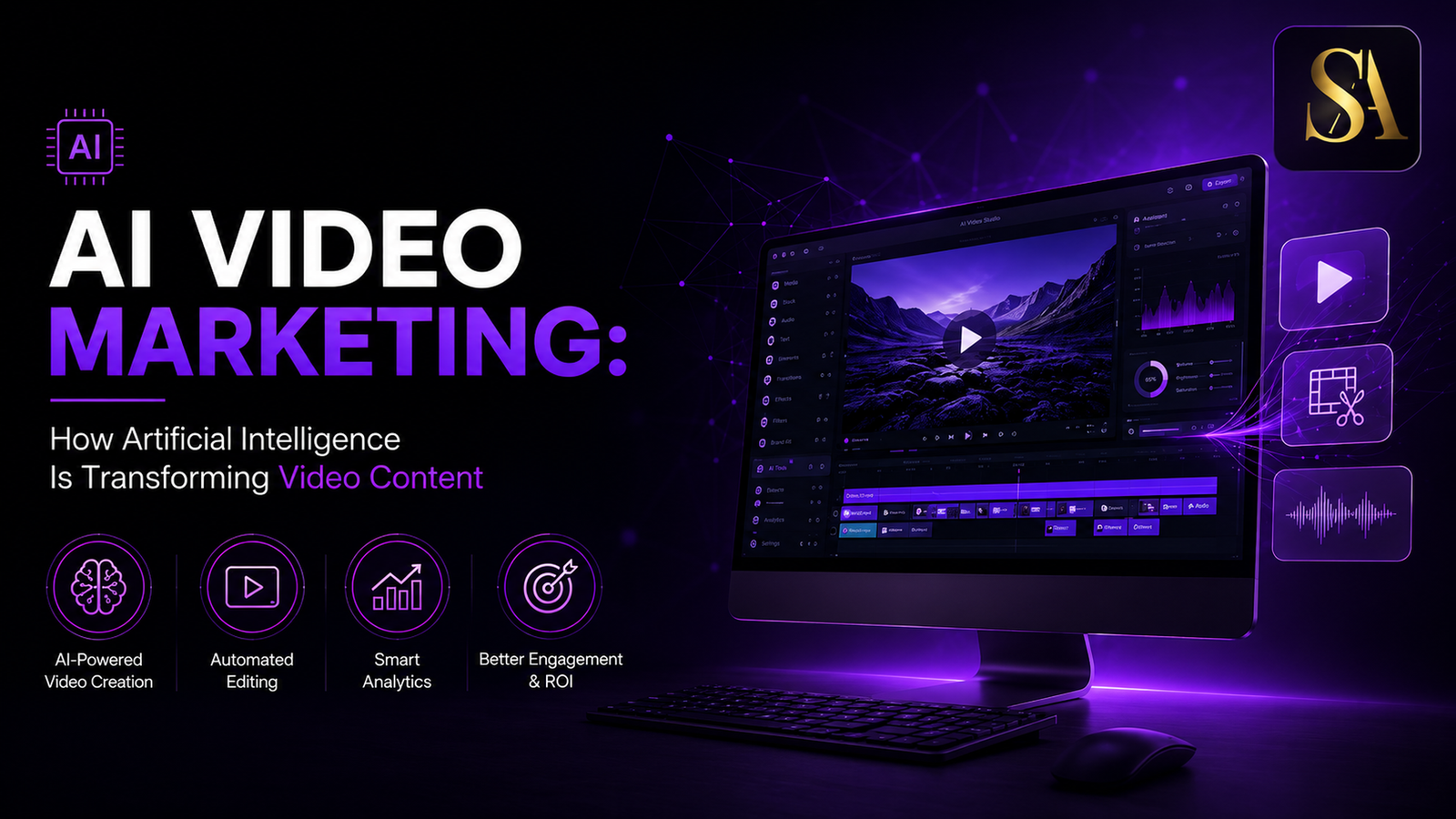
AI Video Marketing: How Artificial Intelligence Is Transforming Video Content
Focus Keyword: AI Video Marketing
https://sanishavp.com/Video has become one of the most effective forms of digital content in modern marketing. Businesses use videos for social media reels, YouTube content, product promotions, advertisements, tutorials, and educational content. Videos help businesses attract attention, explain products or services clearly, build brand awareness, and connect with their audience.
However, creating high-quality videos can take a lot of time, money, and technical skills. Marketers often need to work on scripts, visuals, voiceovers, editing, captions, thumbnails, and promotional strategies. This is where AI video marketing is becoming increasingly useful.
AI-powered tools can help marketers generate ideas, write scripts, create visuals, add voiceovers, edit videos, generate captions, and analyze audience performance. This makes the video creation process faster and easier. AI also helps businesses create content for different platforms and audiences without starting everything from scratch.
What Is AI Video Marketing?
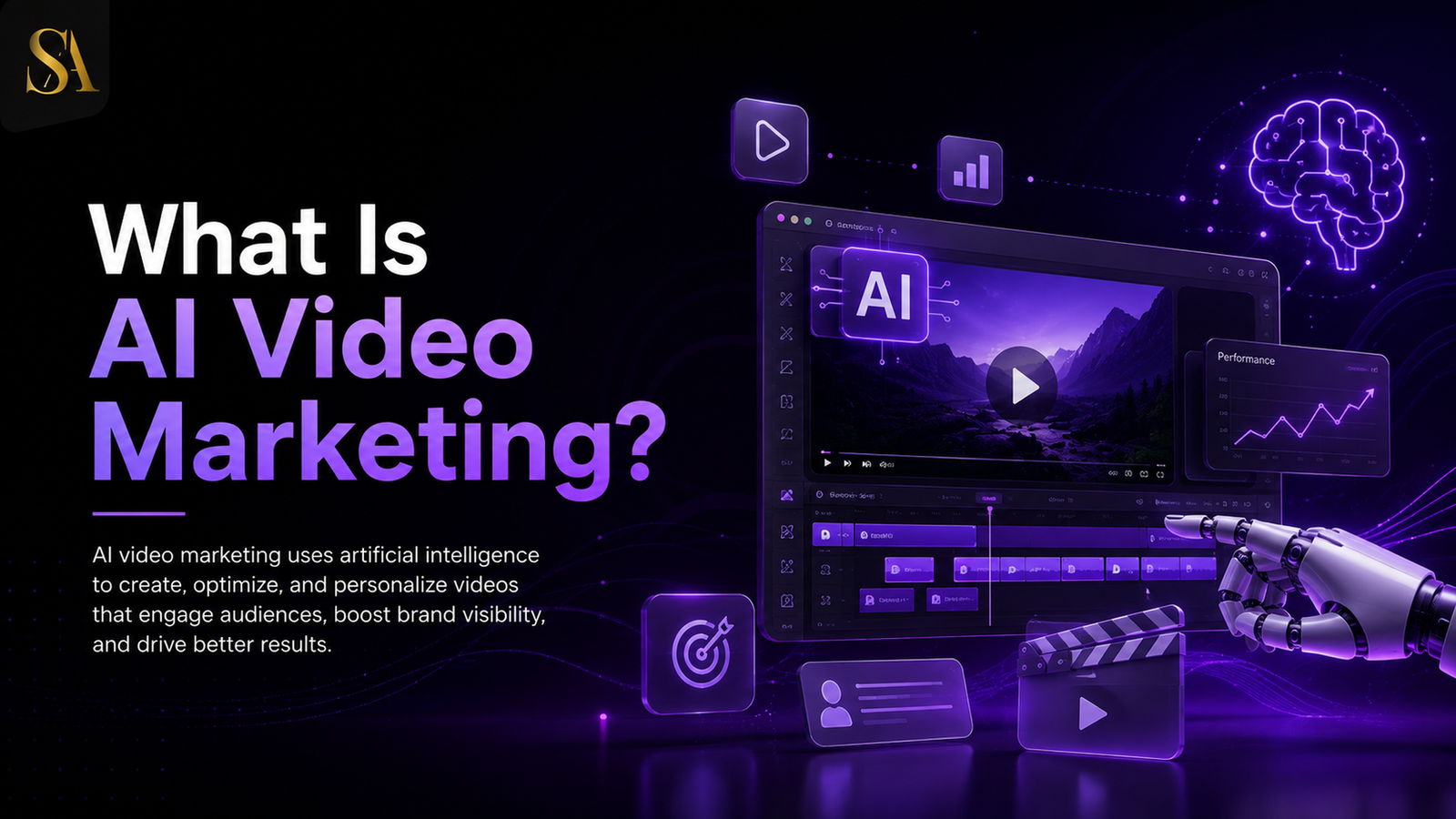
AI video marketinghttps://www.ngram.com/blog/a refers to the use of artificial intelligence technologies to create, optimize, personalize, and promote marketing videos. It combines traditional video marketing techniques with AI-powered tools to automate and improve different stages of the video creation process.
Instead of manually completing every task, marketers can use AI to assist with content planning, scriptwriting, video generation, editing, voiceovers, captions, and performance analysis. For example, a marketer can provide a topic or product description and use an AI tool to generate a video script, suggest visuals, and create a basic video concept.
AI can also help marketers understand their target audience. By analyzing customer behavior and engagement data, AI tools can provide insights into what type of video content audiences prefer. This can help businesses create more relevant and engaging content.
Overall, AI video marketing makes video production more accessible to businesses of different sizes. Small businesses can use AI tools to create useful marketing videos without needing a large production team or expensive equipment.
Why Is AI Video Marketing Important?
The popularity of video content continues to grow across digital platforms. Consumers increasingly use platforms such as Instagram, YouTube, Facebook, and TikTok to discover products, learn new information, and interact with brands.
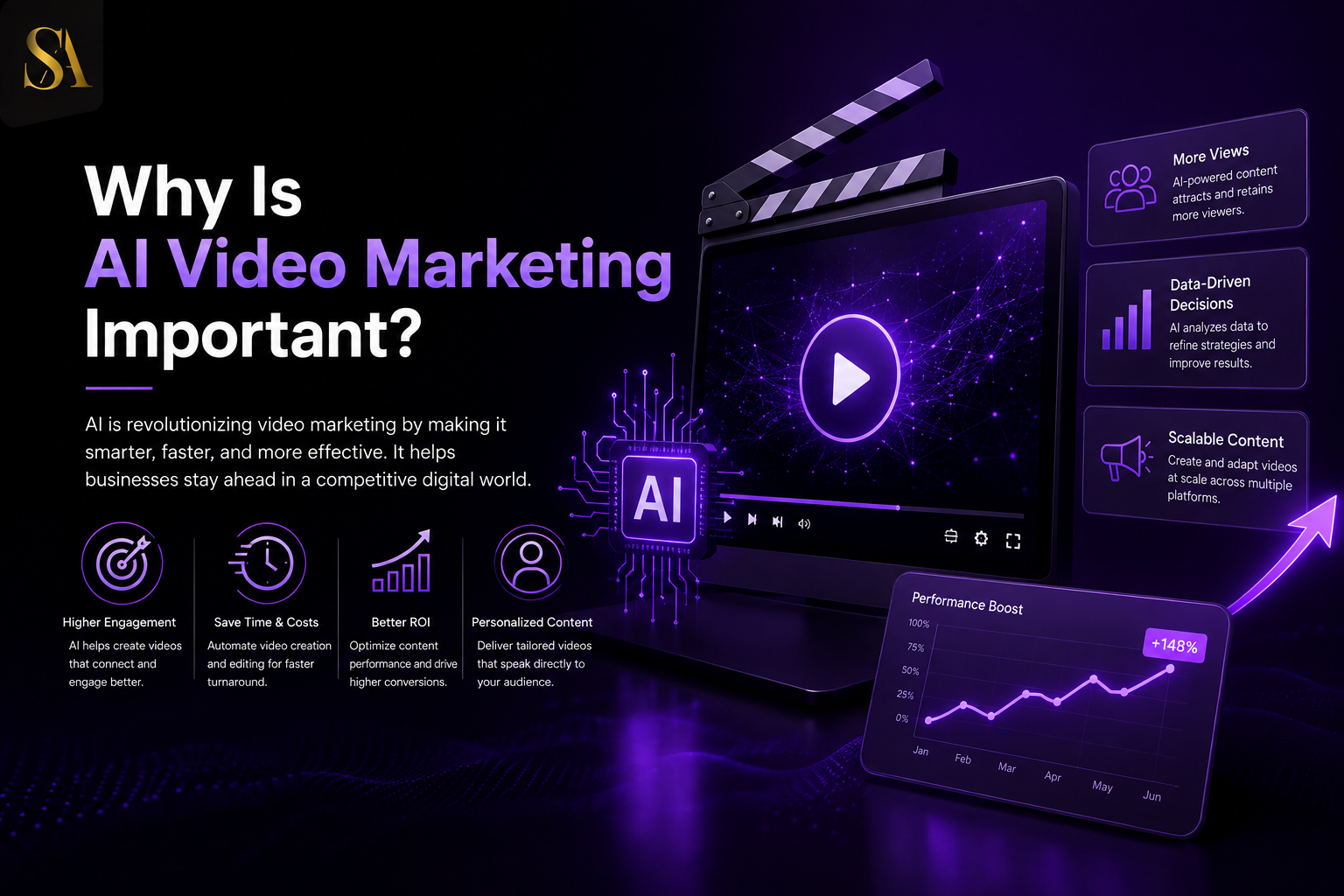
For businesses, this creates an opportunity to reach customers through engaging video content. However, producing videos consistently can be challenging. AI can help solve some of these challenges by reducing the time required for content creation.
One of the biggest advantages of AI video marketing is efficiency. Tasks that previously required hours of manual work can often be completed much faster with AI-powered tools. Marketers can generate multiple content ideas, create scripts, produce captions, and edit videos more efficiently.
AI can also help businesses personalize their content. Different customers may have different interests and preferences. AI can analyze audience data and help marketers create video messages that are more relevant to specific groups.
Another important benefit is scalability. A business may need to create dozens of videos for different products, campaigns, audiences, and platforms. AI can help marketers produce variations of content without completely recreating every video manually.
How AI Is Used in Video Marketing
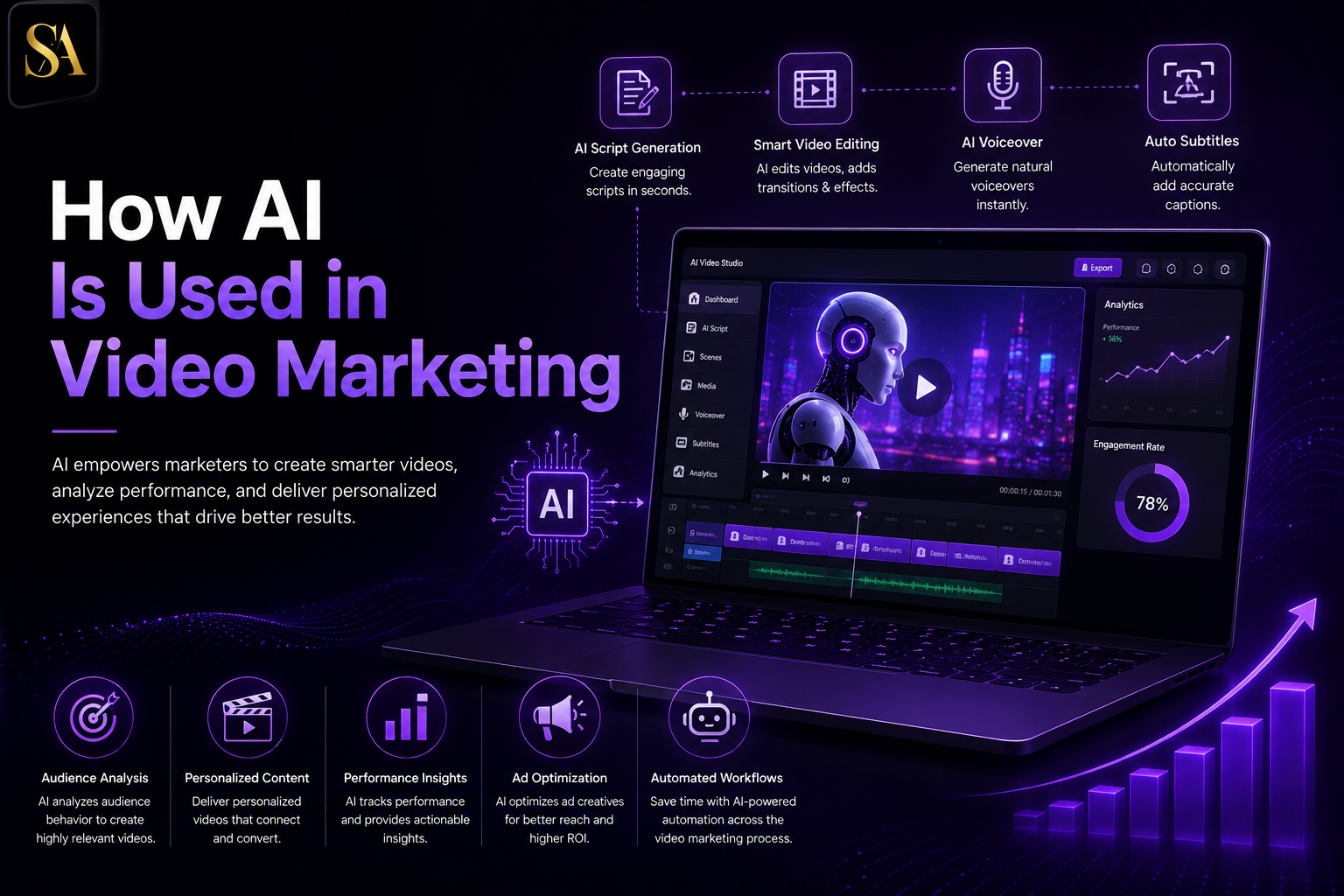
AI can support almost every stage of the video marketing process. Here are some of the most common applications
1. AI Video Script Writing
A good script is one of the most important parts of a successful marketing video. AI writing tools can help marketers generate scripts based on a topic, product, audience, or campaign objective.
For example, a company launching a new product can provide information about the product to an AI tool. The tool can then suggest a video introduction, key benefits, call-to-action, and closing message.
Marketers can also create different versions of a script for different platforms. A YouTube video may require a detailed script, while an Instagram Reel may need a short and engaging message.
2. AI Video Generation
AI video generation tools can create video content from text prompts, scripts, images, or other content. These tools can help businesses create promotional videos, educational videos, product presentations, and social media content.
This can be especially useful for businesses that need to produce content regularly. Instead of spending a long time creating every video from scratch, marketers can use AI to speed up the initial production process.
3. AI Voiceovers
Voiceovers are commonly used in advertisements, tutorials, explainer videos, and educational content. AI voice technology can generate realistic narration in different voices and languages.
This can be useful for businesses that want to create multilingual marketing content. Instead of recording a separate voiceover for every language, marketers can use AI-powered voice tools to produce different versions.
However, businesses should make sure that the voice and tone match their brand and that the use of AI-generated voices is appropriate and transparent when necessary.
4. Automated Video Editing
Video editing can be one of the most time-consuming parts of content production. AI-powered editing tools can help automate tasks such as trimming clips, removing unwanted sections, generating captions, improving audio, and creating short clips.
AI can also identify important sections of longer videos and help turn them into short-form content. This is particularly useful for businesses that want to publish content across multiple social media platforms.
5. AI-Powered Captions and Subtitles
Captions make videos easier to understand, especially when people watch content without sound. AI can automatically generate captions and subtitles from spoken content.
Marketers can also use AI to translate captions into different languages. This can help businesses reach audiences from different regions and make their content more accessible.
6. Personalized Video Marketing
Personalization is another important application of AI in video marketing. AI can analyze customer information and behavior to help marketers create content for specific audience groups.
For example, an online store could create different video recommendations for new customers and returning customers. Personalized content can make marketing messages more relevant and may improve engagement.
AI Video Marketing for Social Media
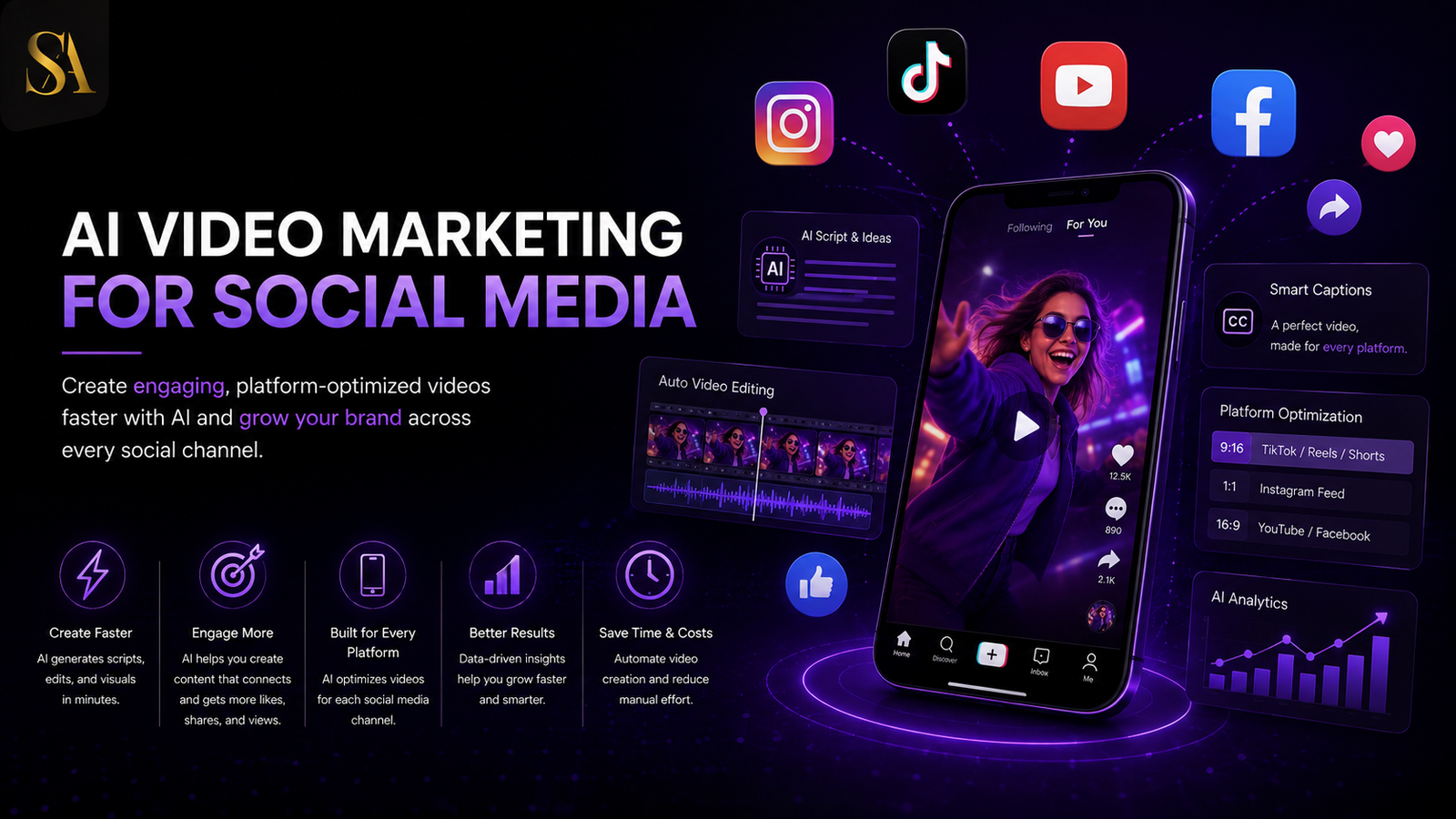
Social media has become one of the biggest platforms for video marketing. Short-form videos, especially, have become an important part of digital marketing strategies.
AI can help marketers create content for platforms such as Instagram, YouTube, Facebook, TikTok, and LinkedIn. A long-form video can be converted into multiple short clips, allowing businesses to create more content from a single piece of material.
AI can also help generate captions, suggest video titles, identify important sections, and adapt content for different formats. For example, a horizontal YouTube video may need to be edited differently for a vertical Instagram Reel.
The key is not simply to create more videos but to create useful and engaging videos that match the expectations of each platform.
Benefits of AI Video Marketing
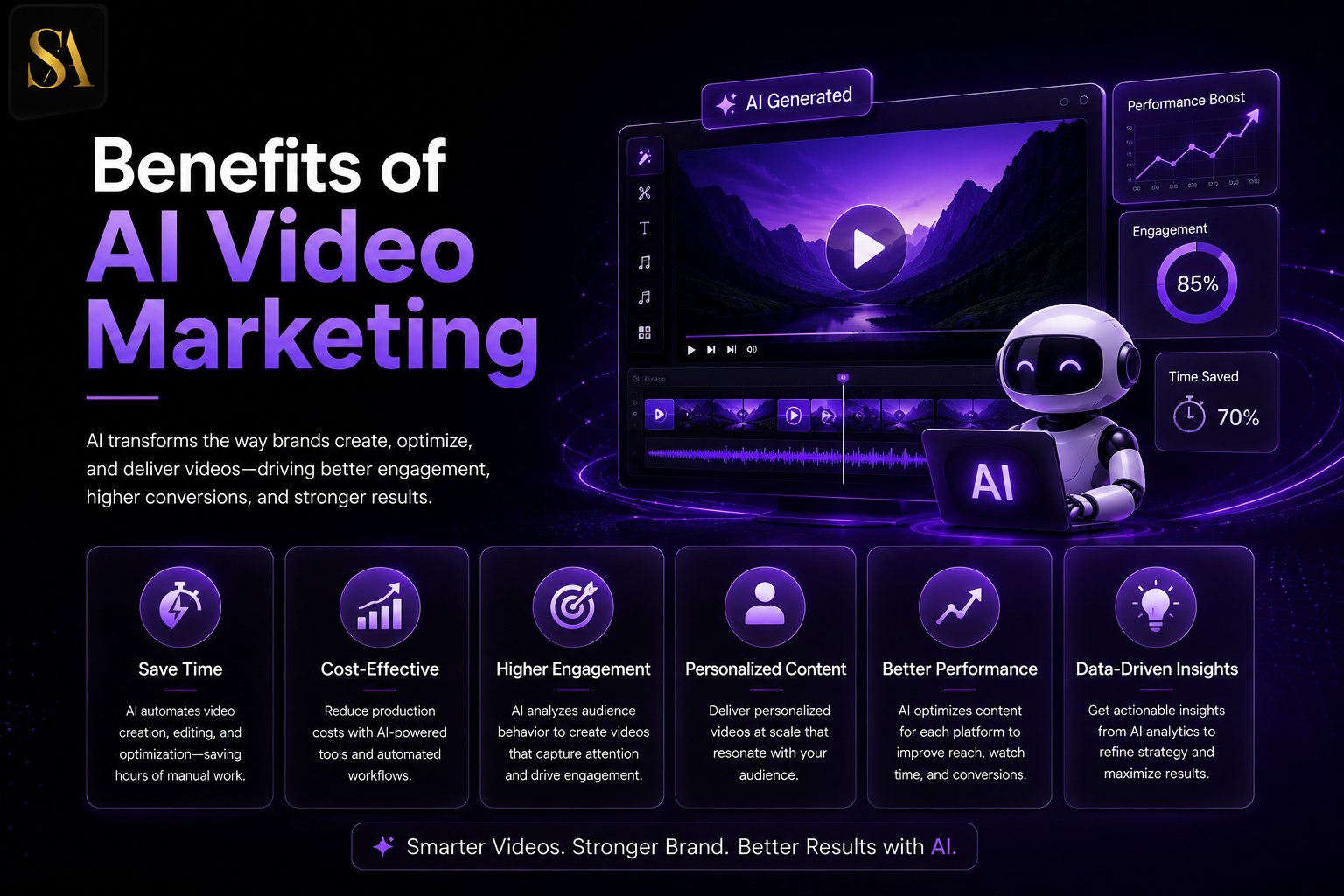
AI video marketing provides several advantages for businesses and marketers.
Saves Time
AI can automate repetitive tasks such as caption generation, script creation, editing, and content repurposing. This allows marketers to spend more time on strategy and creativity.
Reduces Production Costs
Businesses may be able to reduce some production expenses by using AI for tasks that previously required additional software, equipment, or manual labor.
Improves Productivity
Marketing teams can produce more content in less time. This is particularly useful for businesses that need to maintain a consistent publishing schedule.
Supports Personalization
AI can help businesses understand different audience groups and create content that is more relevant to their interests.
Makes Content Creation More Accessible
People without advanced video editing skills can use AI-powered tools to create professional-looking content more easily.
Provides Performance Insights
AI can analyze video engagement and audience behavior, helping marketers understand which content performs well and where improvements are needed.
Best Practices for AI Video Marketing
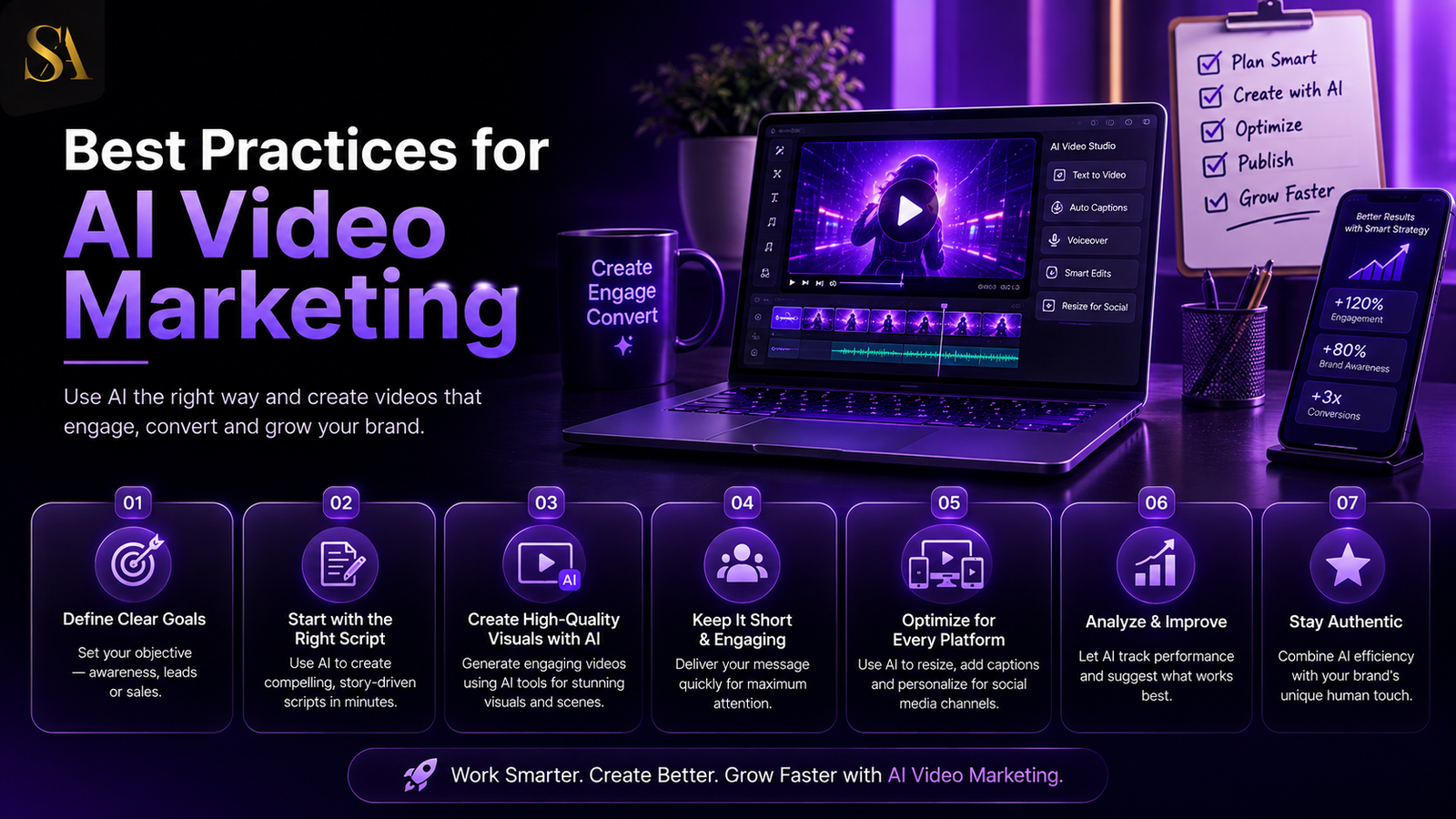
Although AI can make video marketing easier, businesses should use it carefully. Simply generating a video with AI does not guarantee that the content will be successful.
First, marketers should understand their target audience. Videos should be created around the audience’s interests, questions, problems, and needs.
Second, businesses should maintain brand consistency. AI-generated scripts, visuals, and voices should match the company’s brand identity and communication style.
Third, marketers should add human creativity. AI can generate content quickly, but human storytelling, emotion, humor, and original ideas can make videos more memorable.
Quality should also be prioritized over quantity. Businesses should not publish large amounts of low-quality AI-generated content simply because it is easy to create.
Finally, marketers should monitor performance. Metrics such as views, watch time, engagement, audience retention, clicks, and conversions can help determine whether a video is achieving its purpose.
Challenges of AI Video Marketing
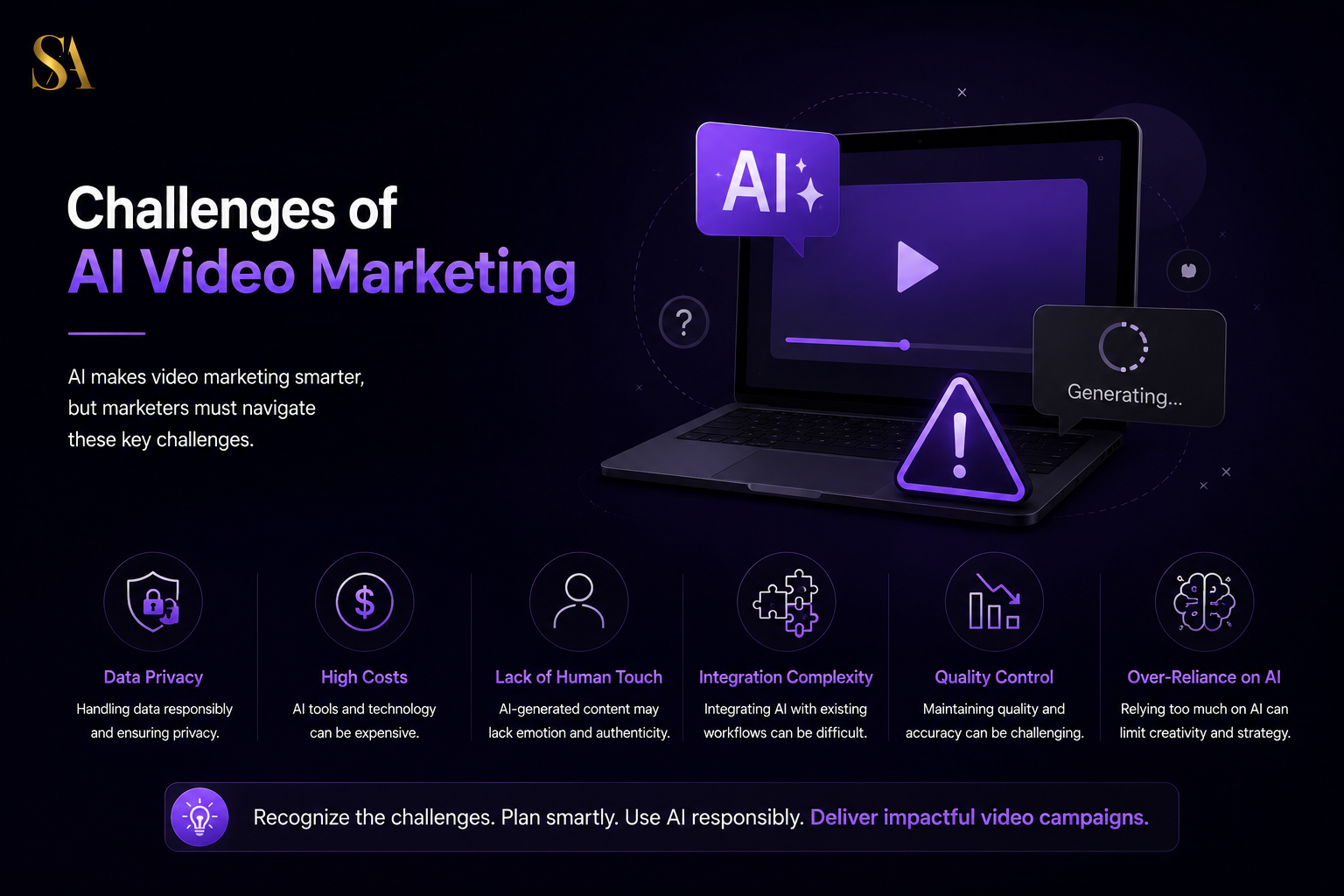
AI video marketing offers many benefits, but it also comes with several challenges. AI-generated videos can sometimes feel generic or repetitive and may lack the emotional depth of human-created content.
AI tools can also produce inaccurate information, incorrect visuals, or unnatural voiceovers. Therefore, marketers should carefully review AI-generated content before publishing it.
There may also be copyright and privacy concerns when using AI-generated images, music, voices, or customer data. Businesses need to understand the rules and licensing conditions associated with the tools and content they use.
Another concern is authenticity. AI-generated voices, faces, and visuals can look very realistic, which may sometimes make it difficult for viewers to identify whether content is real or AI-generated.
For these reasons, AI should be treated as a supporting tool rather than a complete replacement for human creativity and decision-making.
The Future of AI Video Marketing
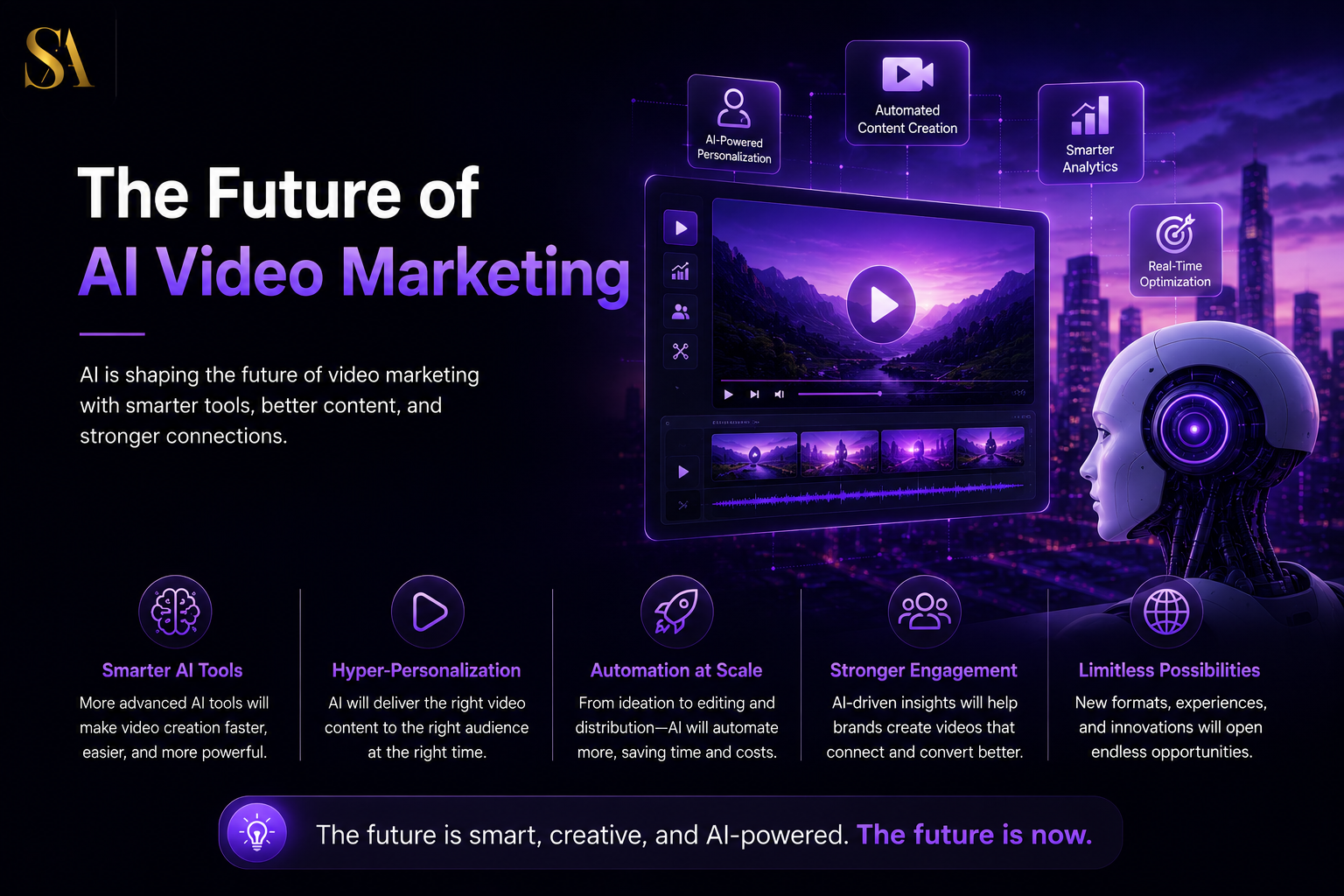
The future of AI video marketing looks promising as artificial intelligence continues to develop. Businesses are likely to have more advanced tools for creating personalized, interactive, and engaging video content.
AI may make it easier to create videos specifically designed for individual audience groups. Businesses could also use AI to analyze viewer behavior in greater detail and automatically recommend content strategies.
Video production may become faster and more accessible, allowing even small businesses to compete with larger brands in terms of content creation.
However, the future of AI video marketing is not about completely replacing humans. AI can provide speed, automation, and data-driven insights, but humans are still needed for creativity, storytelling, emotions, strategic decisions, and brand understanding.
The most effective approach will be to combine AI technology with human creativity. Marketers who learn how to use AI while maintaining originality and authenticity can create stronger and more meaningful video campaigns.
Conclusion
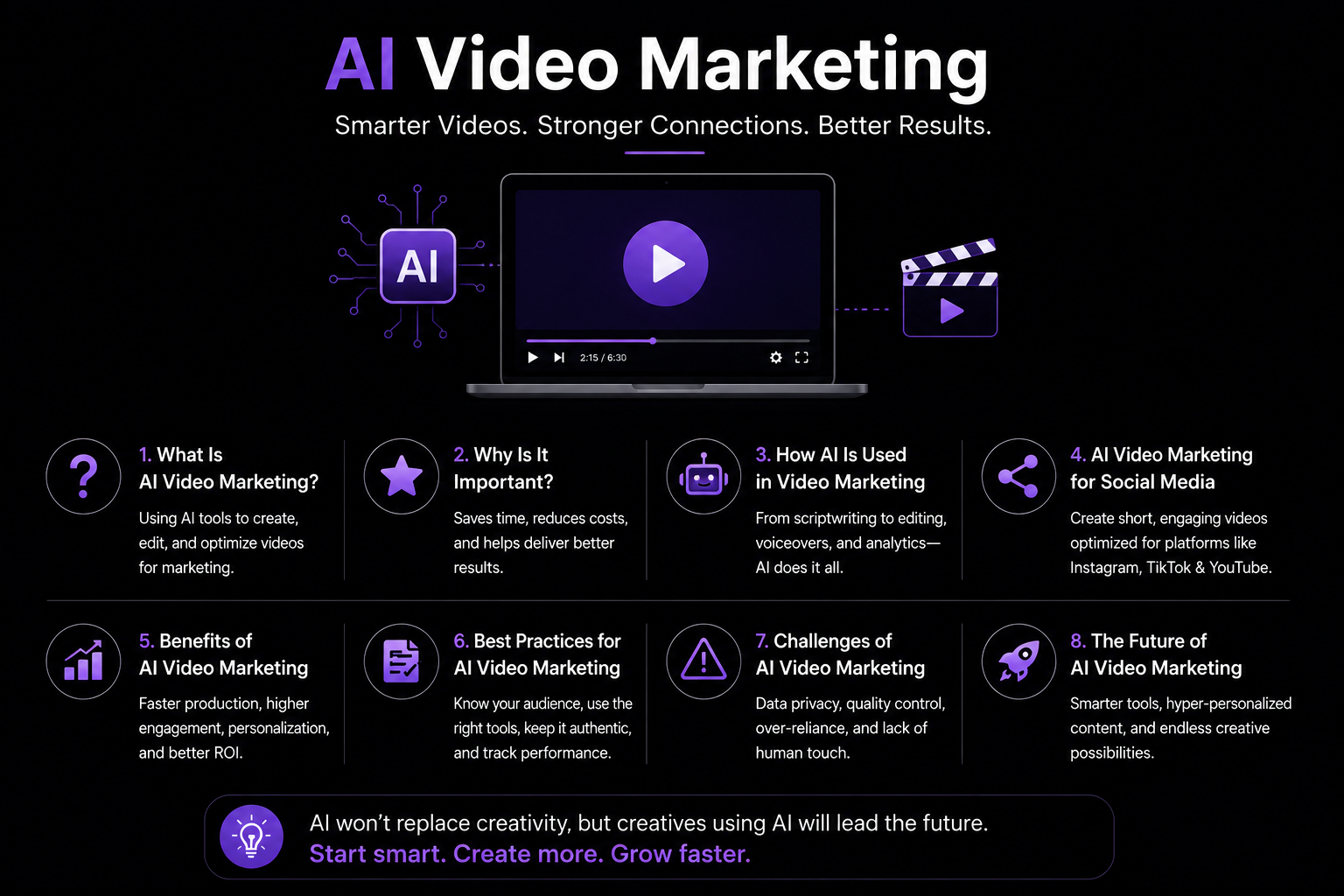
AI video marketing is changing the way businesses create, manage, and promote video content. From scriptwriting and video generation to editing, voiceovers, personalization, and analytics, AI can simplify many parts of the marketing process.
The technology can help businesses save time, reduce production effort, improve productivity, and create content for multiple platforms. At the same time, marketers need to pay attention to quality, accuracy, copyright, privacy, and authenticity.
AI should not replace human creativity. Instead, it should work alongside marketers to make their ideas easier and faster to bring to life. By combining AI-powered tools with human creativity, storytelling, and strategy, businesses can use video marketing more effectively and build stronger connections with their audiences.
As AI technology continues to evolve, AI video marketing will likely become an increasingly important part of digital marketing strategies. Businesses that understand how to use this technology responsibly and creatively will be better prepared for the future of digital content.